Emotional intimacy in relationships is the mysterious adhesive that binds two people together beyond attraction, habit, or even mutual aspiration. Without it, love seems tenuous, superficial, and all too often fleeting. But with it? Everything changes. Trust is more profound. Vulnerability becomes comfortable. And your partner becomes your real home.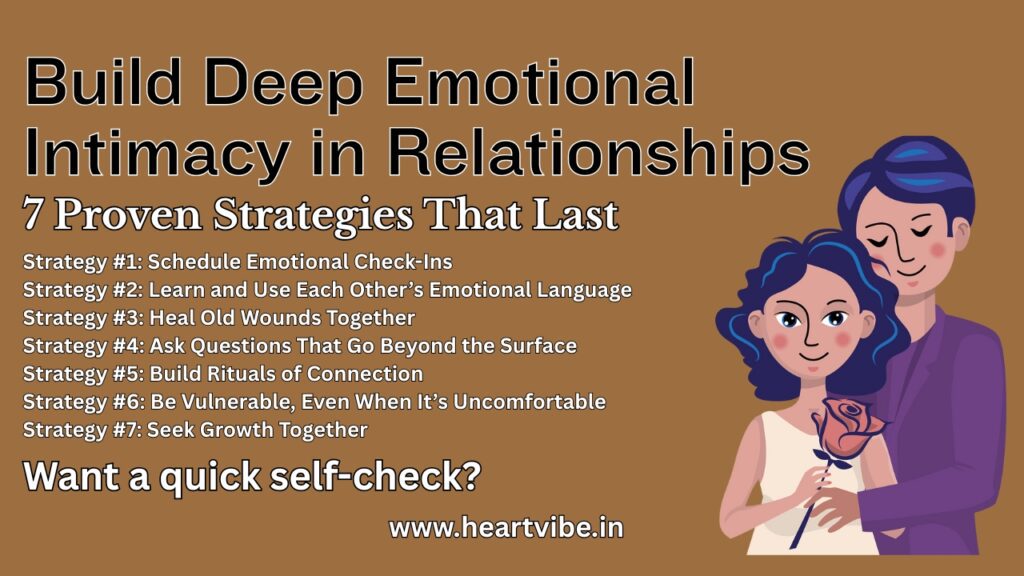
In this guide, we’ll dive into 7 practical strategies to deepen emotional intimacy in your relationship, drawing from real-life stories, expert insights, and recent psychological research.
Why Emotional Intimacy in Relationships Matters
Emotional intimacy is about being seen—truly seen—and still being loved. It’s the ability to sit with each other’s deepest truths without fear of judgment or abandonment.
Without it, you might feel alone even when you’re together.
“I could tell him everything about my day, but not how I felt about us.” – Sophie, 33, recounting her emotionally disconnected marriage.
With it, conversations turn into connection, silence feels safe, and arguments become opportunities for growth.
What Emotional Intimacy in Relationship Looks Like (vs. What It Doesn’t)
| Feature | Emotionally Intimate Relationship | Emotionally Distant Relationship |
|---|---|---|
| Communication | Honest, vulnerable, safe | Surface-level, avoidant |
| Conflict Resolution | Respectful, curious | Defensive, dismissive |
| Support During Hard Times | Emotionally present | Detached or distracted |
| Shared Life Vision | Talked about openly | Vague or ignored |
| Trust | Built through transparency | Eroded by secrecy or indifference |
Strategy #1: Schedule Emotional Check-Ins
Don’t let life get in the way of emotional maintenance. Set aside 15-30 minutes weekly to check in with each other.
What It Looks Like:
-
- Ask: “How are we doing emotionally this week?”
- Share one thing that made you feel connected.
- Share one thing that felt off, even if small.
Real Example:
Lauren and Mike, a couple in Toronto, started doing weekly wine-and-talk nights. They’d sit down, phones off, and ask each other, “What’s on your heart today?”
Result? Less passive aggression. More understanding.
Pro Tip:
Use a journal or app (like Gottman Card Decks) to guide conversations if things feel awkward.
Strategy #2: Learn and Use Each Other’s Emotional Language
This is beyond love languages. Everyone has different ways they process and express emotions.
How To:
-
- Notice how your partner deals with stress.
- Ask them: “What helps you feel supported when you’re overwhelmed?”
- Reflect on your own needs, too.
Real Example:
Liam, a New Zealander, realized his partner needed quiet touch during tough times, while he needed verbal affirmations. Once they communicated this, their support styles aligned.
Research Insight:
According to a 2022 study from the Journal of Couple & Relationship Therapy, couples who actively learn their partner’s emotional cues report 34% higher relationship satisfaction.
Strategy #3: Heal Old Wounds Together
You can’t build new intimacy over unresolved pain.
Start Here:
-
- Talk about past relationship traumas openly.
- Create a non-judgmental space.
- Use phrases like: “When that happened, I felt…”
Case Study:
Ava and Jordan, from Birmingham, struggled with trust after a betrayal. They sought counseling, talked openly about triggers, and slowly rebuilt safety. Today, they say they’re more intimate than ever.
Expert Input:
Dr. Terri Orbuch, known as “The Love Doctor,” says, “Emotional intimacy often grows stronger when couples heal together rather than separately.”
Strategy #4: Ask Questions That Go Beyond the Surface
Small talk never built deep love. Curiosity did.
Questions to Try:
-
- What does love mean to you today?
- When do you feel closest to me?
- What do you fear most in relationships?
Real-Life Trick:
Create a “questions jar” and draw one every dinner night. Make it fun.
Tip: The book “36 Questions That Lead to Love” by NYT is a fantastic resource.
Strategy #5: Build Rituals of Connection
Rituals foster consistency and safety, both critical for emotional intimacy.
Ideas:
-
- Morning check-ins over coffee
- Friday night cuddle + Netflix
- Monthly vision board date nights
Example:
Alex and Priya from Mumbai created a “Sunday Share” ritual: each Sunday night, they write one appreciation note to each other.
Within 6 weeks, their fights reduced drastically.
Checklist: Is Your Ritual Working?
Strategy #6: Be Vulnerable, Even When It’s Uncomfortable
Nothing deepens emotional intimacy like raw, honest vulnerability.
Practice This:
-
- Admit fears without expecting solutions.
- Share when you feel disconnected.
- Let your walls come down before a fight breaks out.
Story:
Carmen, 38, from California, shared: “I told my husband I was scared of outgrowing him emotionally. Instead of being defensive, he said he felt the same. It opened a new door for us.”
Strategy #7: Seek Growth Together
Couples who grow together, stay together.
Ways To Grow:
-
- Take a personal development course
- Attend couples retreats
- Read relationship books together
Example:
Ben and Lucas, a same-sex couple from Sydney, took a 3-week relationship coaching course online. They learned how to argue better and connect deeper. They now do annual check-ins and say it saved their relationship.
Resources:
-
- Rebuild Your Relationship: Rekindle Love and Intimacy
- The Gottman Institute: Pioneers in emotional connection
- Esther Perel: Modern relationship psychology
Emotional Intimacy Checklist : Want a quick self-check?
10 FAQs About Emotional Intimacy in Relationships
1.What exactly is emotional intimacy in relationships?
It’s the closeness and vulnerability that allows both partners to be fully seen, heard, and supported emotionally.
2.Can emotional intimacy be built later in a relationship?
Absolutely. It can even grow stronger over time with consistent effort.
3.How is emotional intimacy different from physical intimacy?
Emotional intimacy is about connection through feelings and trust, while physical intimacy is about touch and sexual closeness.
4.Why do we feel distant even though we love each other?
Lack of emotional communication and vulnerability often leads to disconnection despite love.
5.What breaks emotional intimacy?
Avoidance, judgment, dishonesty, and lack of time together are the top intimacy killers.
6.How do I get my partner to open up emotionally?
Create safe spaces, avoid judgment, and be emotionally vulnerable yourself first.
7.Can therapy help emotional intimacy?
Yes. Couples therapy or even individual counseling helps uncover emotional blocks.
8.Do long-distance couples struggle more with emotional intimacy?
They can, but with effort—like scheduled video talks, love letters, and vulnerability—it can thrive.
That requires honest conversations, boundaries, and sometimes, professional help.
10.Is emotional intimacy necessary for long-term happiness?
Yes. It’s one of the strongest predictors of long-term relationship satisfaction, according to Harvard research.
Final Thoughts: You Deserve Deep Connection
Building emotional intimacy in relationships isn’t about perfection. It’s about presence. Small moments of honesty, consistent check-ins, and brave vulnerability form the roots of love that lasts.
“Love doesn’t disappear. It gets quiet when emotional safety leaves the room. Bring it back. Fight for it. Choose it.”
Your emotional intimacy isn’t lost. It’s just waiting to be rebuilt—brick by brave brick.
Start tonight. Ask the hard question. Share the soft truth. Reconnect.
Useful Articles :-
- Signs of Love Bombing: 7 Red Flags to Spot Manipulative Affection Early
- What Is a Situationship? 7 Unfiltered Truths About Modern Love
- 10 Signs of a Healthy Relationship: What To Look For
- Communication Skills for Couples: 7 Transformative Tips to Strengthen Your Connection
- 7 Powerful Ways to Build Healthy Relationship Boundaries for Lasting Love
- 9 Empowering Steps for Recovering from a Breakup: Heal, Grow, and Thrive
- 7 Powerful Long-Distance Relationship Advice : Tips to Keep the Spark Alive
- Jealousy in Relationships: 7 Powerful Ways to Manage the Green-Eyed Monster
- 5 Insights Into Love Languages in Relationships : Do They Really Work?
- What Does Emotional Safety In Relationships? 7 Biblical Keys to Building Trust and Intimacy