In the journey of love, knowing how to improve communication in a relationship may hold the secret to a world of trust and understanding. Let’s look at eight effective techniques that will change the way you speak and listen to your partner and create a closer, more lively bond.

1. Create a Safe Space for Conversations
Open and honest dialogue flourishes in a safe space.
Imagine this: You’re sitting on the couch with your partner, sharing your fears and dreams without the worry of judgment or criticism. It’s that safety net that lets your vulnerabilities surface and your voice be heard.
-
Example: Mia and Jack, married for 12 years, found that every time they talked about finances, it turned into an argument. They decided to set up a “talk night” every Sunday, agreeing to really listen without interrupting. This small change created a safe, judgment-free zone that turned tense conversations into loving, constructive ones.
-
Checklist:
-
-
Choose a calm, neutral setting.
-
Set ground rules: no yelling, no blame.
-
Validate each other’s feelings.
-
Let your partner finish before responding.
-
-
2. Practice Active Listening
What Is Active Listening?
Active listening is more than just hearing the words—it’s about truly understanding and responding. You’re giving your partner your full attention, showing them they matter.
-
Practical Example: During a heated moment, instead of instantly reacting to Alex’s complaint, Sam repeated what Alex said in his own words. “So you’re saying you felt dismissed when I scrolled through my phone during dinner, right?” This simple act of reflecting helped Alex feel seen and appreciated.
-
Expert Insight: Dr. Gary Chapman, author of “The Five Love Languages,” says, “Listening to your partner is the single most powerful tool for intimacy.”
3. Express Yourself Clearly and Kindly
Avoid Assumptions and Be Direct
When sharing your thoughts, be clear, kind, and direct. Avoid sugarcoating or assuming your partner can read your mind.
-
Example: Instead of saying, “You never help around here,” try, “I feel overwhelmed managing the chores alone. Can we find a way to share the load?”
-
Recent Research: A 2024 study from the University of California, Berkeley, found that partners who express needs directly rather than hinting or blaming experience 37% fewer conflicts and report feeling more understood.
4. Use “I” Statements Instead of “You” Statements
Shift From Blame to Ownership
Blaming language can spark defensiveness. Try using “I” statements to own your feelings and open the door for connection.
-
Comparison Table:
| Blaming Language | “I” Statement Approach |
|---|---|
| “You never listen to me!” | “I feel unheard when I’m sharing.” |
| “You always make me angry!” | “I feel upset when my opinions aren’t valued.” |
| “You’re so selfish!” | “I feel alone when I don’t feel supported.” |
5. Learn Each Other’s Communication Styles
Speak Their Language
Everyone communicates differently. Maybe your partner needs time to process, while you prefer to talk things through immediately. Recognizing these differences can bridge the gap.
-
Case Study: Leah and Ben, a couple from Toronto, had constant fights because Ben needed time to cool off after disagreements, while Leah wanted to talk right away. A relationship coach helped them understand their styles. Leah learned to give Ben space, and Ben agreed to reconnect within an hour. Their relationship blossomed because they learned to respect each other’s communication rhythms.
-
External Resource: Check out the Gottman Institute’s “Four Communication Styles” to learn more about this!
6. Schedule Regular Check-ins
Keep the Dialogue Flowing
Life gets busy, and it’s easy to let important conversations slide. That’s why weekly or bi-weekly check-ins can strengthen your connection.
-
Example: Raj and Priya, partners for seven years, do a “love check-in” every Saturday morning. They share:
-
One thing they appreciate about each other.
-
One thing that’s been challenging.
-
One thing they’d like to improve together.
-
This ritual keeps them aligned and feeling heard.
7. Embrace Non-Verbal Communication
The Power of Touch, Eye Contact, and Body Language
Sometimes, what’s unsaid speaks volumes. A reassuring touch, a warm smile, or leaning in to show interest can express deep love and understanding.
-
Recent Research: A 2023 study in the “Journal of Social and Personal Relationships” found that non-verbal cues, like physical touch and body language, boost relationship satisfaction by up to 45%.
8. Seek Professional Support When Needed
Therapy and Counseling Can Work Wonders
It’s perfectly okay to seek help when communication gets stuck. A trained professional can help break toxic patterns and guide you toward healthier ways of relating.
-
Example: Maria and Theo felt their arguments were getting out of hand. They sought therapy, and within a few months, they learned conflict-resolution skills that strengthened their bond. “We felt like we had a roadmap to navigate disagreements,” Maria shared.
-
Expert Interview: In an interview with Dr. Emily Stone, licensed marriage and family therapist, she shared: “Couples often wait too long to seek help. Counseling isn’t a sign of failure—it’s a sign of commitment to your love.”
A Quick Checklist to Boost Your Communication Right Now
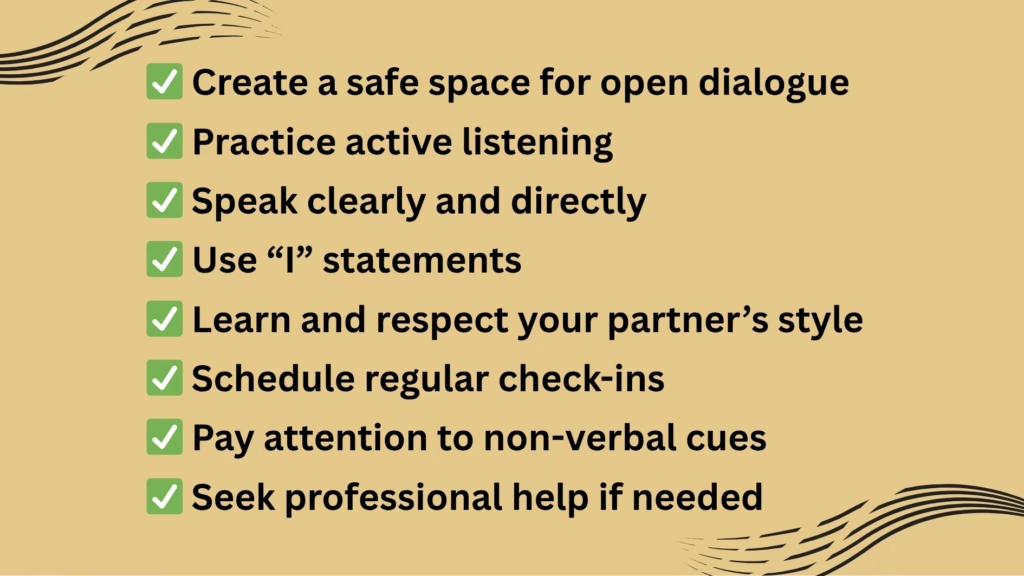
Conclusion: Your Path to Deeper Connection
The goal of improving communication in a relationship is to show up, listen intently, and discover new ways to connect each and every day, not to be flawless. When we have the courage to express our feelings and the patience to listen to each other fully, love blossoms.
Special Advice Just for You
Keep in mind that the spark is maintained by the small exchanges of affectionate, sincere conversation. Ask your companion, “How are you really feeling?” for a moment today.—and allow that to be the first of many talks that will strengthen your bond.
Call to Action
👉 Share your thoughts below! How do you create safe spaces for conversations in your relationship? Let’s build a community of love and connection. And if you’re ready to take the next step, subscribe to our newsletter for weekly relationship insights and expert tips.
10 FAQs About How to Improve Communication in a Relationship
1. Why is communication important in a relationship?
Communication is the lifeline of any relationship—it’s how you share needs, build trust, and resolve conflicts. Without it, misunderstandings and distance grow.
2. How can I start a difficult conversation?
Choose a calm time, use “I” statements, and be clear about what you’re feeling. Starting with a positive statement, like “I love us, and I want to make this better,” can soften the approach.
3. What should I do if my partner shuts down during talks?
Give them space, show empathy, and let them know you’re there when they’re ready. Pushing too hard can make them retreat further.
4. Are there any books or resources you recommend?
Yes! “Nonviolent Communication” by Marshall Rosenberg is a great resource for learning compassionate communication. Link.
5. How often should we have check-ins?
Weekly or bi-weekly is ideal, but even monthly is better than none! Consistency matters more than frequency.
6. What if our communication styles clash?
Discuss openly and find compromises. If you need help, consider a couples therapist—it’s a safe space to explore these differences.
7. How can I make my partner feel heard?
Maintain eye contact, nod to show understanding, repeat back what you heard, and avoid distractions like your phone.
8. What role does body language play?
It’s huge! Open posture, eye contact, and gentle touch can show love and reduce tension even when words fail.
9. What if we keep having the same argument?
Identify the root cause—often it’s about feeling unheard or undervalued. Revisit the conversation when emotions are calm.
10. When is it time to seek professional help?
If conflicts become frequent, feel unsafe, or lead to emotional distance, it’s wise to bring in an expert perspective.
Useful Articles :-
- Signs of Love Bombing: 7 Red Flags to Spot Manipulative Affection Early
- What Is a Situationship? 7 Unfiltered Truths About Modern Love
- 10 Signs of a Healthy Relationship: What To Look For
- Communication Skills for Couples: 7 Transformative Tips to Strengthen Your Connection
- 7 Powerful Ways to Build Healthy Relationship Boundaries for Lasting Love
- 9 Empowering Steps for Recovering from a Breakup: Heal, Grow, and Thrive
- 7 Powerful Long-Distance Relationship Advice : Tips to Keep the Spark Alive
- Jealousy in Relationships: 7 Powerful Ways to Manage the Green-Eyed Monster
- 5 Insights Into Love Languages in Relationships : Do They Really Work?
- What Does Emotional Safety In Relationships? 7 Biblical Keys to Building Trust and Intimacy