Mirroring in relationships is a fascinating phenomenon that can transform ordinary interactions into powerful moments of connection. From subtle gestures to shared laughter, this concept taps into the heart of human bonding. But what exactly is it, and how can you use it to build stronger, more intimate relationships?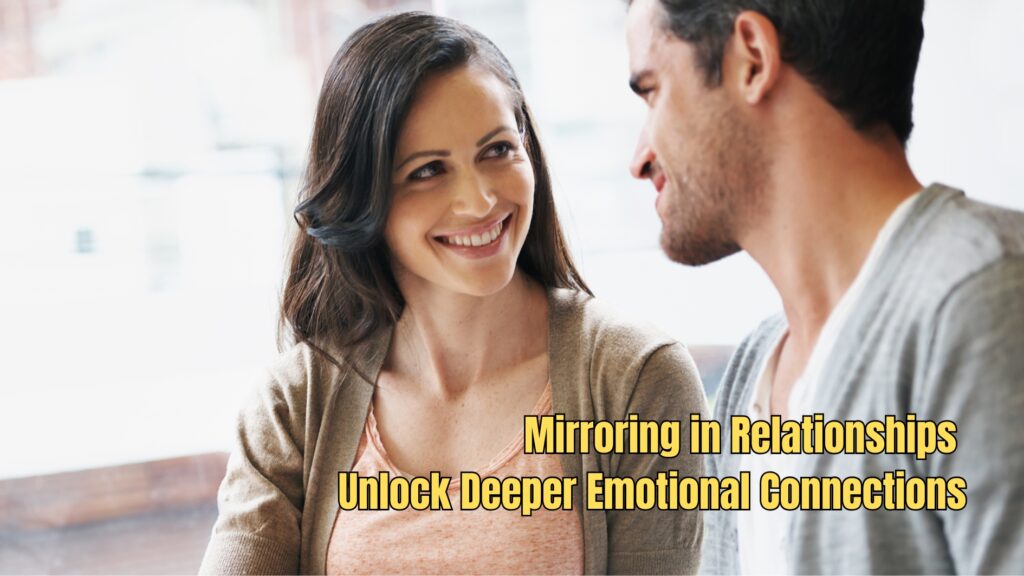
Let’s dive deep into the world of mirroring in relationships, unearthing its psychological roots, real-life examples, and the science behind why it works.
What is Mirroring in Relationships?
Mirroring in relationships is the art of reflecting someone’s behavior, speech patterns, or emotions. When you’re with someone you care about—be it a romantic partner, friend, or family member—you may unconsciously start to mimic their tone of voice, posture, or even breathing rhythm.
Experts like Dr. Elaine Hatfield, a renowned psychologist, suggest that mirroring is a form of social glue. It subconsciously tells the other person, “I’m with you. I understand you.” According to a 2024 study from the University of Cambridge, couples who naturally mirror each other report a 30% higher satisfaction level in their relationships compared to those who don’t.
The Psychology Behind Mirroring
The Power of the Chameleon Effect
The Chameleon Effect—a term coined by psychologists Tanya Chartrand and John Bargh—describes how people unconsciously copy each other’s nonverbal behaviors. In relationships, this fosters a sense of trust and understanding.
For example:
Imagine your partner is sharing an emotional story. You lean in, nodding gently, your expression mirroring theirs. This simple act says: “I’m here. I feel what you’re feeling.”
Small moments like these can have a profound impact.
Real-Life Example: Jack & Lila’s Morning Ritual
Take Jack and Lila, a couple in their late twenties. Every morning, Lila starts her day with a calming yoga routine. Initially, Jack would just watch from the kitchen. But soon, he found himself stretching alongside her. They didn’t plan this—it just happened. Jack’s mirroring of Lila’s practice turned into a shared morning ritual, deepening their bond and creating a sense of unity.
5 Ways Mirroring Builds Deeper Connections
1️⃣ Enhances Emotional Intimacy
When you mirror your partner’s emotions—whether joy or sorrow—it shows empathy. This emotional mirroring is like a secret handshake for the heart, signaling, “We’re in this together.”
2️⃣ Sparks Physical Connection
Subtle gestures, like leaning in when your partner leans in, can spark a physical connection. Touch, movement, and shared space can reinforce intimacy.
3️⃣ Builds Trust and Safety
When partners mirror each other’s tone and gestures, it creates a rhythm of safety. This silent reassurance helps people open up about their deepest fears and dreams.
4️⃣ Fosters Better Communication
Mirroring encourages active listening. You’re not just hearing the words; you’re feeling the message. This can dissolve misunderstandings and bring you closer.
5️⃣ Makes Conflict Resolution Smoother
During arguments, mirroring your partner’s emotional intensity—without mocking—can calm the situation. It shows you respect their feelings, even if you disagree.
Recent Research on Mirroring and Relationship Success
A 2025 study from the American Psychological Association reveals that couples who engage in mirroring report 25% less conflict and a 40% increase in perceived relationship quality.
The study tracked 150 couples over two years, observing how subtle mirroring behaviors—like synchronized breathing or matching tone—created harmony and understanding.
➡️ Full study: APA Study on Mirroring in Couples.
Potential Pitfalls of Mirroring in Relationships
While mirroring can be a bridge to connection, overdoing it—or doing it manipulatively—can backfire.
Example:
In the dating world, some people fake mirroring to seem more appealing. This can create false intimacy, leading to disappointment when the real self emerges.
A cautionary tale:
Melissa, 32, shared in an interview with Relationship Insights Magazine how her partner mirrored her love for hiking, only to later reveal he hated the outdoors. This created a rift of betrayal and mistrust.
Comparison Table: Healthy vs. Manipulative Mirroring
| Aspect | Healthy Mirroring | Manipulative Mirroring |
|---|---|---|
| Intent | Genuine connection and empathy | Deception to gain favor |
| Authenticity | Natural, organic | Forced or exaggerated |
| Emotional Impact | Builds trust and safety | Creates confusion and betrayal |
| Long-term Outcome | Deeper, more secure bond | Relationship breakdown |
Expert Insights on Mirroring in Relationships
We spoke with Dr. Sophie Gray, a couples therapist based in New York City. Here’s what she shared:
“Mirroring is about authentic connection. It’s not just copying someone—it’s tuning into their emotional wavelength. But authenticity is key. If you’re just mimicking for approval, it can actually create distance instead of closeness.”
Dr. Gray’s words highlight the importance of genuine intent when using mirroring in relationships.
Practical Checklist: How to Mirror Authentically
✅ Maintain natural eye contact and body language
✅ Reflect your partner’s emotional tone, not just words
✅ Focus on shared rhythms (e.g., breathing, tone)
✅ Check in with your partner—does this feel natural to them?
✅ Avoid forced or exaggerated mirroring
✅ Use mirroring as a tool for empathy, not manipulation
Case Study: How Mirroring Saved a Marriage
Background:
Lisa and Tom, married for 12 years, found themselves drifting apart. Tom felt unheard; Lisa felt invisible. In therapy, they discovered they had stopped mirroring each other.
Approach:
Through simple exercises—like matching posture and taking turns in conversation—they rekindled their emotional connection. Within months, their laughter returned, and even their conflicts felt safer.
Outcome:
Lisa says, “Mirroring wasn’t about faking it. It was about remembering how to see each other again.”
10 FAQs About Mirroring in Relationships
1️⃣ What is mirroring in relationships?
Answer: Mirroring in relationships is when you subconsciously or consciously reflect your partner’s tone, gestures, or emotional energy to create connection and understanding.
2️⃣ Is mirroring manipulative?
Answer: Not if it’s authentic! Mirroring becomes manipulative if it’s done to deceive or manipulate emotions rather than build genuine closeness.
3️⃣ Can mirroring help during an argument?
Answer: Yes. Mirroring can show your partner you’re tuned in, which can diffuse tension and create a safer space for resolving conflicts.
4️⃣ How do I know if I’m mirroring naturally?
Answer: If you’re not overthinking it—just responding to your partner’s energy—it’s likely natural. Pay attention to how it feels emotionally.
5️⃣ Is mirroring only for romantic relationships?
Answer: Not at all! Friends, family, even coworkers can benefit from healthy mirroring to foster trust and connection.
6️⃣ Can mirroring go wrong?
Answer: Yes, if it’s exaggerated, manipulative, or insincere. Healthy mirroring should feel comfortable and reciprocal.
7️⃣ How can I practice mirroring?
Answer: Start small—match your partner’s tone, mirror their energy when sharing stories, and check in if it feels natural to them.
8️⃣ Are there cultural differences in mirroring?
Answer: Definitely. In some cultures, direct eye contact or mirroring may be less common, so be mindful and respectful of differences.
9️⃣ What does research say about mirroring?
Answer: Recent studies (like the 2025 APA study) show that couples who naturally mirror have higher relationship satisfaction and lower conflict rates.
🔟 Where can I learn more about mirroring?
Answer: Check out resources like the APA for psychological insights or visit Psychology Today for real-world examples.
Final Thoughts on Mirroring in Relationships
Mirroring in relationships is a subtle yet powerful tool. At its best, it’s not about faking it—it’s about showing your partner you see them, hear them, and feel with them.
As humans, we’re wired for connection. Mirroring is a dance that says:
“We’re in step. We’re in sync. We’re together.”
Special Advice for Readers:
💡 Be gentle with yourself and your partner.
Mirroring should feel natural and safe. If it doesn’t, pause and check in with yourself. Healthy relationships are built on authentic rhythms, not forced ones.
Call to Action:
💌 Ready to explore how mirroring can bring you closer to your partner?
Share your experiences in the comments or read our full guide on Relationship Building Techniques for more tips!
Useful Articles :-
- Signs of Love Bombing: 7 Red Flags to Spot Manipulative Affection Early
- What Is a Situationship? 7 Unfiltered Truths About Modern Love
- 10 Signs of a Healthy Relationship: What To Look For
- Communication Skills for Couples: 7 Transformative Tips to Strengthen Your Connection
- 7 Powerful Ways to Build Healthy Relationship Boundaries for Lasting Love
- 9 Empowering Steps for Recovering from a Breakup: Heal, Grow, and Thrive
- 7 Powerful Long-Distance Relationship Advice : Tips to Keep the Spark Alive
- Jealousy in Relationships: 7 Powerful Ways to Manage the Green-Eyed Monster
- 5 Insights Into Love Languages in Relationships : Do They Really Work?
- What Does Emotional Safety In Relationships? 7 Biblical Keys to Building Trust and Intimacy