Introduction
The signs of a situationship often sneak in quietly—like background noise you don’t realize is there until it’s blasting. It begins fun, playful, perhaps even exciting. But as the weeks go by, you find yourself getting caught in a frustrating gray area that‘s not quite casual, but not quite committed either. Seeing the signs early will spare you emotional burnout and years of uncertainty.
What is a Situationship, Really?
A situationship is a romantic relationship that doesn’t have defined boundaries or a specific purpose. You’re beyond friends, perhaps even physically intimate, but you’re not really in a relationship. It‘s like being in relationship purgatory.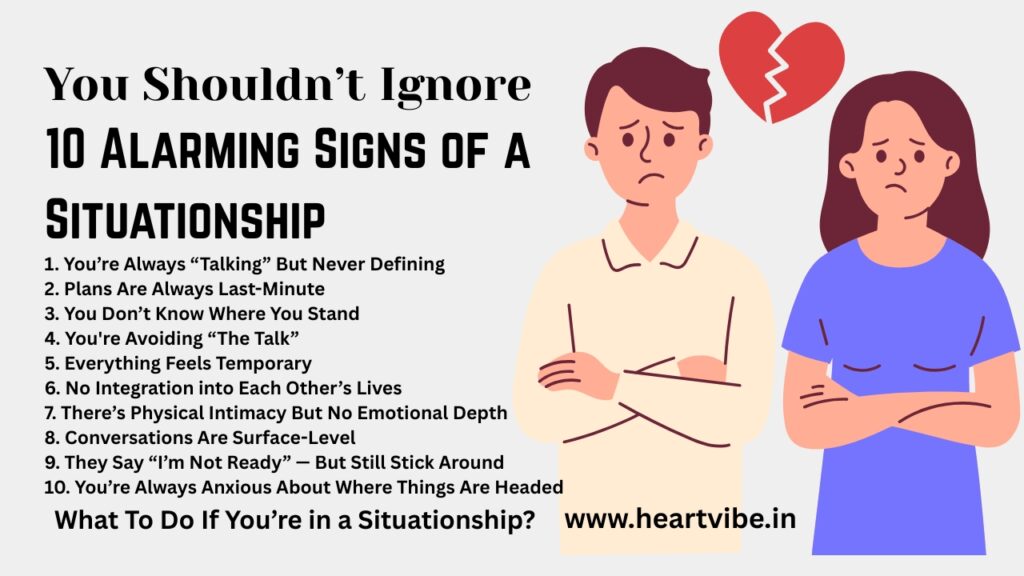
You date, but refuse to call it dating. You sleep over, but don’t call it that either. You’re emotionally involved, but there’s a barrier between “now“ and then. It‘s not only confusing—it‘s draining.
Why Situationships Are Becoming So Common
Let’s face it: modern dating is a maze.
-
Apps make meeting people easy, but committing to one person? Not so much.
-
Fear of commitment is often disguised as “I just want to go with the flow.”
-
Social media glamorizes casual flings and downplays emotional accountability.
It’s a culture of “what ifs” instead of “what is.”
10 Clear Signs of a Situationship
1. You’re Always “Talking” But Never Defining
If months have passed and you’re still unsure of what you are, that’s a glaring sign. You’re “seeing each other,” not dating. You’re “hanging out,” not in a relationship.
Example: Sarah and Jay have been texting every day and hooking up for 7 months. Yet, when she asked where things were going, he replied, “Let’s not ruin what we have with labels.”
Translation? He likes the benefits, not the responsibilities.
2. Plans Are Always Last-Minute
Spontaneity is great—until it becomes a pattern. If your partner only hits you up when they’re bored, drunk, or just “in the mood,” then you’re probably not their priority.
Example: Ali’s date night always depended on whether his “friend” was free Friday night. If she wasn’t, only then did he call Maya.
You deserve to be someone’s first choice, not a backup plan.
3. You Don’t Know Where You Stand
One week you feel like you’re building something real. The next, you’re ghosted or emotionally shut out. That inconsistency isn’t quirky—it’s damaging.
4. You’re Avoiding “The Talk”
If the thought of asking “What are we?” gives you anxiety, chances are you already know the answer.
Tip: Love shouldn’t feel like walking on eggshells. If honesty scares them off, that’s on them—not you.
5. Everything Feels Temporary
They say all the right things… but don’t follow through. There are no future plans, no “us” in their vision, and every moment feels fleeting.
Example: Jake and Tina travel together but never talk about the next trip. There’s always a wall when future plans come up.
6. No Integration into Each Other’s Lives
If you haven’t met their friends, family, or even popped up on their social media—there’s a reason.
You’re being kept in a separate box, far from the rest of their world.
7. There’s Physical Intimacy But No Emotional Depth
It’s hot, it’s passionate… and yet, after you’re done, you feel more alone than ever. If your emotional needs are always sidelined, you’re not in a healthy bond.
8. Conversations Are Surface-Level
You don’t talk about goals, fears, or anything real. It’s small talk, all the time. You know their favorite food but not their trauma.
That’s not emotional safety—it’s avoidance.
9. They Say “I’m Not Ready” — But Still Stick Around
It’s one of the most common lines in a situationship:
“I’m not ready for a relationship, but I love spending time with you.”
That’s emotional breadcrumbing. They’re not committing, but they’re not letting go either.
10. You’re Always Anxious About Where Things Are Headed
Constant anxiety is not part of a healthy relationship. If you’re overthinking every text, every interaction, and fearing abandonment—listen to your gut.
Your peace is your proof. If it’s not peaceful, it’s probably not right.
Situationship vs Relationship – A Side-by-Side Comparison
| Feature | Situationship | Relationship |
|---|---|---|
| Emotional Security | Uncertain | Stable |
| Defined Commitment | Lacks clarity | Clearly established |
| Future Plans | Avoided | Discussed openly |
| Social Integration | Kept apart | Included in personal life |
| Conflict Resolution | Avoided or postponed | Addressed with care |
Expert Opinions on Situationships
Dr. Jenn Mann, relationship therapist and author, explains:
“Situationships can feel like a relationship without the security. It’s emotional limbo that can damage self-worth if prolonged.”
Psychologist Esther Perel also emphasizes how ambiguity can feed emotional dependency.
Real-Life Case Studies
Case 1: “I Lost 2 Years in Limbo”
Ria, 29, dated someone for two years without a label.
“I thought time would bring clarity, but it only brought more confusion.”
Case 2: “He Said He Wasn’t Ready—But Dated Someone Else”
Mike, 34, shares:
“When she said she wasn’t ready for commitment, I respected that. Until she posted her new boyfriend three weeks later.”
Recent Research Behind Situationship Psychology
According to a 2024 study published in The Journal of Social Psychology, nearly 48% of millennials and Gen Z have experienced a situationship. Researchers link it to attachment anxiety, fear of vulnerability, and modern digital dating habits.
Emotional Checklist – Are You In One?
✅ You’re confused about your status
✅ Your needs are rarely met
✅ You avoid asking “What are we?”
✅ You feel anxious, not secure
✅ You’re giving more than receiving
What To Do If You’re in a Situationship
-
Acknowledge the truth – Don’t sugarcoat it.
-
Communicate clearly – Ask where it’s going.
-
Set boundaries – Don’t accept breadcrumbs.
-
Decide what YOU want – Not just what they offer.
-
Walk away if needed – Peace over confusion.
How To Talk About “What Are We?”
Try this:
“I care about you and enjoy our time together. But I need to understand where this is going. I’m looking for clarity, not pressure.”
Say it with confidence and kindness.
Breaking Free – Reclaiming Your Emotional Peace
Letting go hurts, but staying in confusion hurts longer.
Remember: You’re not asking for too much. You’re just asking the wrong person.
Conclusion – You Deserve Clarity and Commitment
Situationships may be easy, but they are an expense of your emotional serenity. Identify the warning signs. Initiate the conversation. And if you‘re not receiving what you require—choose yourself. Clarity is love. Confusion is not.
FAQs : Signs of a Situationship
1.What is the main difference between a situationship and a relationship?
A relationship has mutual commitment and clarity, while a situationship lacks both.
2.Is it okay to be in a situationship?
Only if both parties are on the same page and emotionally fulfilled. Otherwise, it leads to confusion.
3.Can a situationship turn into a real relationship?
Yes, but it requires honest communication and effort from both sides.
4.Why do people settle for situationships?
Fear of loneliness, low self-esteem, or believing the other person will eventually commit.
5.How do I end a situationship without drama?
Be honest, calm, and clear. You deserve to prioritize your emotional health.
They’re small gestures that give hope without real commitment, keeping you emotionally hooked.
7.Why do situationships hurt more than breakups?
Because there’s no closure or clarity, making the emotional toll heavier.
8.Can you stay friends after ending a situationship?
It’s possible, but rare. Most need time apart to heal.
9.Is it wrong to ask “What are we?”
Not at all. Clarity is a sign of maturity, not desperation.
10.What if they walk away after I ask for clarity?
Then they weren’t serious. Their leaving confirms your worth isn’t tied to their indecision.
Useful Articles :-
- 10 Examples of Gaslighting in Relationships: Recognizing the Red Flags Early
- 7 Powerful Ways How to Build Emotional Intimacy in Your Relationship
- What Is Breadcrumbing in Dating? Spotting the Subtle Red Flags
- Understanding Emotionally Unavailable Signs: Are You in a One-Sided Relationship?
- How to Stop Being Clingy in a Relationship: 10 Empowering Steps to Build Confidence and Space
- Signs of Love Bombing: 7 Red Flags to Spot Manipulative Affection Early
- What Is a Situationship? 7 Unfiltered Truths About Modern Love
- 10 Signs of a Healthy Relationship: What To Look For
- Communication Skills for Couples: 7 Transformative Tips to Strengthen Your Connection
- 7 Powerful Ways to Build Healthy Relationship Boundaries for Lasting Love