“Wives killing their husbands” is a disturbing reality that permeates contemporary relationships; it’s not just a headline. The concept may sound terrifying, but the reality is frequently worse than evil: mental illness, emotional abuse, unequal power dynamics, treachery, and a frantic plea for assistance that is ignored until it is too late. This essay explores the social, psychological, and emotional causes of this unsettling tendency from a human standpoint rather than passing judgment.

The Psychology Behind Wives Killing Their Husbands
In the very first line, it must be said: “Wives killing their husbands” is not born out of cold-blooded intent but often emotional implosion. This trend has more to do with psychological breakdowns than sinister planning.
Real-Life Case Example:
In a 2024 case from Meerut, India, a woman confessed to killing her husband after years of silent suffering from marital rape, verbal abuse, and financial control. The murder wasn’t premeditated—it happened in the middle of a violent outburst when he tried to choke her.
7 Root Causes Behind the Rise of Domestic Homicides by Wives
1. Emotional Suppression and Unresolved Trauma
-
Many women suppress emotions to maintain family harmony.
-
Anger, betrayal, or fear is internalized until it becomes explosive.
-
Expert Insight: Dr. Shiv Prasad (Lady Hardinge Medical College) explains, “These women often operate on emotional autopilot. When suppressed trauma collides with ongoing abuse, they react violently, not rationally.”
2. Psychological Disorders & Mental Health Neglect
-
Depression, PTSD, borderline personality disorder, and psychosis are common threads.
-
Most of these women go untreated due to stigma or lack of access.
-
Case Study: A Bengaluru woman diagnosed with paranoid schizophrenia fatally stabbed her husband during a delusional episode.
3. Years of Domestic Abuse
-
According to the National Family Health Survey, 1 in 3 women in India report domestic abuse.
-
Physical and emotional scars fester into resentment and sometimes, revenge.
4. Betrayal and Infidelity
-
When betrayal is added to emotional exhaustion, it creates a volatile mix.
-
“I gave him my entire life. He gave himself to someone else,” a woman said during her trial for poisoning her husband after finding proof of his extramarital affair.
5. Economic Dependence Leading to Helplessness
-
When women can’t walk away financially, they may lash out to escape oppression.
-
UN Women reports show that women without financial independence are twice as likely to stay in abusive relationships.
6. Cultural Pressure to Keep Marriages Intact
-
Societies often glorify endurance in marriage.
-
Women feel trapped between shame and survival.
7. Digital Isolation and Erosion of Emotional Intimacy
-
In the age of WhatsApp arguments and Instagram comparisons, real conversations are vanishing.
-
Relationships lose depth, warmth, and humanity.
Expert Interviews – What Therapists and Criminologists Say
“These are not ‘cold cases’. They’re ‘burned out’ cases—burned by silence, rage, and years of invalidation.” – Dr. Rajiv Mehta, Clinical Psychologist, Mumbai
“What we’re seeing isn’t just crime. It’s an emotional landslide. Therapy could’ve changed the ending.” – Advocate Neelima D’Souza, criminal defense lawyer, Bengaluru
Comparison Table – Traditional Marriage Conflict vs. Modern Emotional Violence
| Element | Traditional Conflict | Modern Emotional Breakdown |
|---|---|---|
| Communication Style | Verbal arguments | Silent withdrawals, ghosting |
| Role of In-laws | Mediate, often biased | Absent or irrelevant |
| Public Perception | “Adjust and survive” | “Snap and suffer silently” |
| Support Systems | Family involvement | Isolation, lack of emotional anchors |
| Common Resolution | Compromise, stay for kids | Breakdown, emotional burnout |
The Global Perspective – Not Just an Indian Issue
From the USA to Japan, spousal killings by women follow similar patterns:
-
Japan: “Karoshi” (death from overwork) includes emotional neglect by husbands.
-
U.S.: 14% of homicides by women in 2023 were spousal-related—most had previous abuse records.
-
UK: Clare’s Law allows women to access their partner’s criminal history—India lacks such tools.
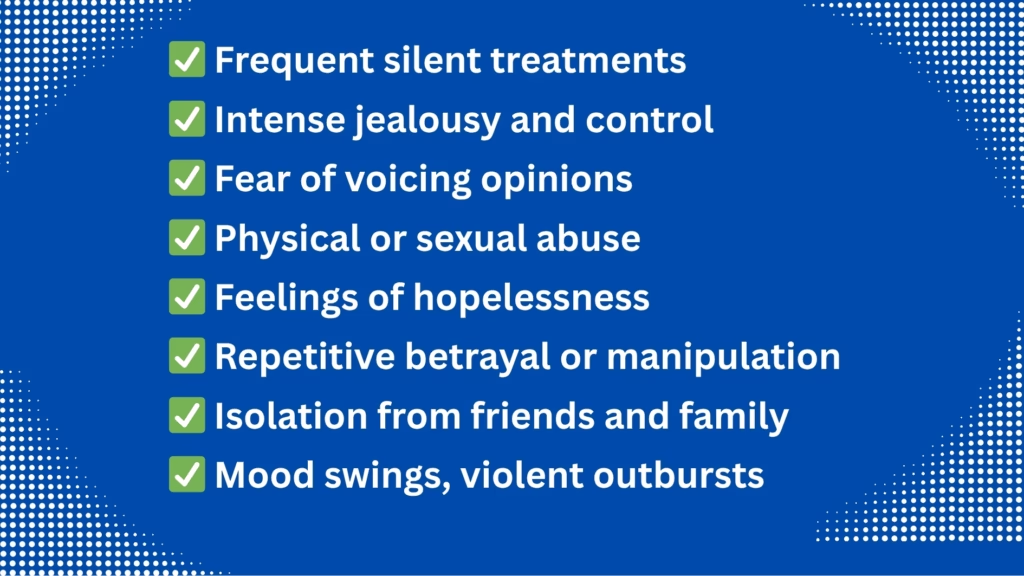
Checklist – Early Warning Signs in a Toxic Marriage
Healing Paths – What Can Be Done Before It’s Too Late

Counseling and Therapy Access
-
Encourage couples and individuals to seek professional help.
-
Free platforms like iCall offer anonymous support.
Normalize Walking Away Over Violent Retaliation
-
Leaving isn’t weakness. It’s wisdom.
-
Legal aid and safe shelters must be promoted more widely.
Train Police and Lawyers in Trauma-Sensitive Handling
-
Insensitive handling can re-trigger victims and push them into further instability.
10 FAQs About Wives Killing Their Husbands
Q1. Is mental illness always a factor in such cases?
Not always, but untreated trauma or disorders often contribute.
Q2. Are these murders usually premeditated?
Most are spontaneous, emotional explosions rather than calculated acts.
Q3. What legal protections exist for abused women?
India has the Protection of Women from Domestic Violence Act, 2005, but implementation remains weak.
Q4. Can therapy prevent domestic homicides?
Yes, therapy can address triggers before they escalate.
Q5. Are men never the victims in abusive marriages?
Men also suffer, but statistically, women face more systemic oppression and abuse.
Q6. What role does financial dependence play?
It’s significant. Trapped women may feel there’s no exit but violence.
Q7. Are these cases increasing globally?
Yes. Emotional disconnection and untreated trauma are global issues.
Q8. Why don’t women leave instead?
Fear, lack of support, stigma, and children are key reasons.
Q9. Can emotional violence be worse than physical?
Absolutely. Chronic emotional neglect can destabilize mental health deeply.
Q10. What’s society’s role in prevention?
Normalizing therapy, improving awareness, and reducing stigma are vital.
Final Thoughts – Let’s Listen Before It’s Too Late
The story of wives killing their husbands is not one of evil. It’s a warning tale about what happens when safety vanishes, love becomes mute, and injuries are left untreated. We could avoid such terrible consequences if society treated emotional suffering with the same seriousness as physical illness.
Special Advice for Readers
Don’t wait for a breakdown if you’re in a relationship where you’re suffering in silence. Make contact. Speak with a friend. Make a hotline call. Make an appointment for therapy. Reclaiming yourself doesn’t have to involve violence.
Call to Action
👉 Share this article to spread awareness.
👉 Talk about therapy like you talk about the gym.
👉 Subscribe for more emotionally powerful relationship insights.
Useful Articles :-
- Signs of Love Bombing: 7 Red Flags to Spot Manipulative Affection Early
- What Is a Situationship? 7 Unfiltered Truths About Modern Love
- 10 Signs of a Healthy Relationship: What To Look For
- Communication Skills for Couples: 7 Transformative Tips to Strengthen Your Connection
- 7 Powerful Ways to Build Healthy Relationship Boundaries for Lasting Love
- 9 Empowering Steps for Recovering from a Breakup: Heal, Grow, and Thrive
- 7 Powerful Long-Distance Relationship Advice : Tips to Keep the Spark Alive
- Jealousy in Relationships: 7 Powerful Ways to Manage the Green-Eyed Monster
- 5 Insights Into Love Languages in Relationships : Do They Really Work?
- What Does Emotional Safety In Relationships? 7 Biblical Keys to Building Trust and Intimacy