Building trust in marriage after betrayal feels like trying to piece together a shattered mirror—every shard reflecting pain, confusion, and doubt. Yet, with patience, empathy, and guided action, many couples not only heal but emerge stronger. This roadmap offers practical, research-backed steps to help you navigate the storm and rebuild a resilient, loving partnership.
🧭 The Journey to Rebuild: An Overview
Trust is the cornerstone of any marriage. When it’s broken, the path to restoration requires intentional effort, open communication, and often, professional guidance. This guide delves into nine transformative steps, enriched with real-life examples, expert insights, and actionable tools to support couples on their healing journey.
🛠️ 9 Steps to Heal After Betrayal
1. Acknowledge the Betrayal and Take Responsibility
The first step towards healing is acknowledging the breach of trust. The partner who committed the betrayal must own their actions without deflection or justification.
“Taking responsibility is vital for the partner who committed the betrayal. This means acknowledging the breach of trust and understanding its repercussions.”
Real-Life Example: Amparo Macalua discovered her husband’s decade-old affair and lovechild. Despite the profound hurt, her husband’s genuine remorse and accountability paved the way for forgiveness and rebuilding.
2. Express Genuine Remorse and Empathy
An apology is more than words; it’s about conveying sincere regret and understanding the pain caused. Empathy bridges the emotional gap between partners.
“Empathy plays a crucial role in the healing process. The partner who betrayed must strive to understand the hurt partner’s perspective and feelings.”
Practical Tip: Use active listening techniques. When your partner speaks, focus entirely on their words, validate their feelings, and refrain from interjecting your perspective immediately.
3. Establish Clear Boundaries
Setting boundaries provides a sense of safety and clarity. Both partners should collaboratively define acceptable behaviors and expectations moving forward.
Examples of Boundaries:
-
Communication: Schedule regular check-ins to discuss feelings and progress.
-
Transparency: Agree on sharing access to devices or accounts if it aids in rebuilding trust.
-
Social Interactions: Define acceptable interactions with individuals outside the marriage, especially those related to the betrayal.
“Rebuilding trust requires the establishment of clear boundaries. Both partners must discuss what behaviors are acceptable moving forward.”
4. Engage in Open and Honest Communication
Transparent communication is the bedrock of trust. Both partners should feel safe expressing their feelings, concerns, and needs without fear of judgment.
Expert Insight: Dr. Talal H. Alsaleem emphasizes the importance of addressing underlying issues and fostering open dialogue to heal from infidelity.
Practical Tip: Use “I” statements to express feelings, such as “I feel hurt when…” instead of accusatory “You” statements.
5. Seek Professional Counseling
Therapy offers a neutral space to explore emotions, understand underlying issues, and develop coping strategies. Approaches like Emotionally Focused Therapy (EFT) have proven effective in restoring trust.
“Emotionally Focused Therapy (EFT) is a short-term treatment developed in the 1980s… EFT unfolds in three stages consisting of nine steps.”
Resource: Consider the eBook “Rebuild Your Relationship” available at www.storedigipro.in for guided exercises and insights.
6. Allow Time for Healing
Healing is not linear. It’s essential to recognize that rebuilding trust takes time, and setbacks may occur. Patience and perseverance are key.
“Rebuilding trust is not a straightforward or cookie-cutter process; it takes time and effort.”
Practical Tip: Celebrate small victories and progress milestones to maintain motivation and hope.
7. Rebuild Emotional and Physical Intimacy
Restoring intimacy involves reconnecting emotionally and physically. Engage in activities that foster closeness and rekindle affection.
Suggestions:
-
Plan regular date nights.
-
Engage in shared hobbies or interests.
-
Practice non-sexual physical touch, like holding hands or hugging.
“As trust slowly rebuilds, couples must prioritize restoring their emotional and physical connection.”
8. Commit to Transparency
Transparency reinforces accountability. Sharing information openly can alleviate suspicions and demonstrate commitment to change.
Examples:
-
Discuss daily plans and schedules.
-
Be open about social interactions.
-
Share feelings and thoughts regularly.
“Rebuilding trust after betrayal requires complete transparency.”
9. Engage in Self-Reflection and Personal Growth
Both partners should reflect on their behaviors, triggers, and patterns. Personal growth contributes to a healthier relationship dynamic.
Practical Tip: Journaling can be a powerful tool for self-discovery and processing emotions.
🔍 Comparison Table: Trust Rebuilding Strategies
| Strategy | Description | Benefits |
|---|---|---|
| Acknowledgment & Responsibility | Owning up to actions without excuses | Lays foundation for forgiveness |
| Empathy & Remorse | Understanding and validating partner’s feelings | Bridges emotional gap |
| Clear Boundaries | Defining acceptable behaviors moving forward | Provides safety and clarity |
| Open Communication | Honest discussions about feelings and needs | Enhances understanding and connection |
| Professional Counseling | Seeking therapy for guided healing | Offers tools and neutral perspective |
| Time & Patience | Allowing space for healing without pressure | Prevents rushed or superficial recovery |
| Rebuilding Intimacy | Engaging in activities that foster closeness | Restores emotional and physical bond |
| Transparency | Open sharing of information and intentions | Reinforces accountability |
| Self-Reflection | Personal growth and understanding | Improves individual and relational health |
✅ Trust Rebuilding Checklist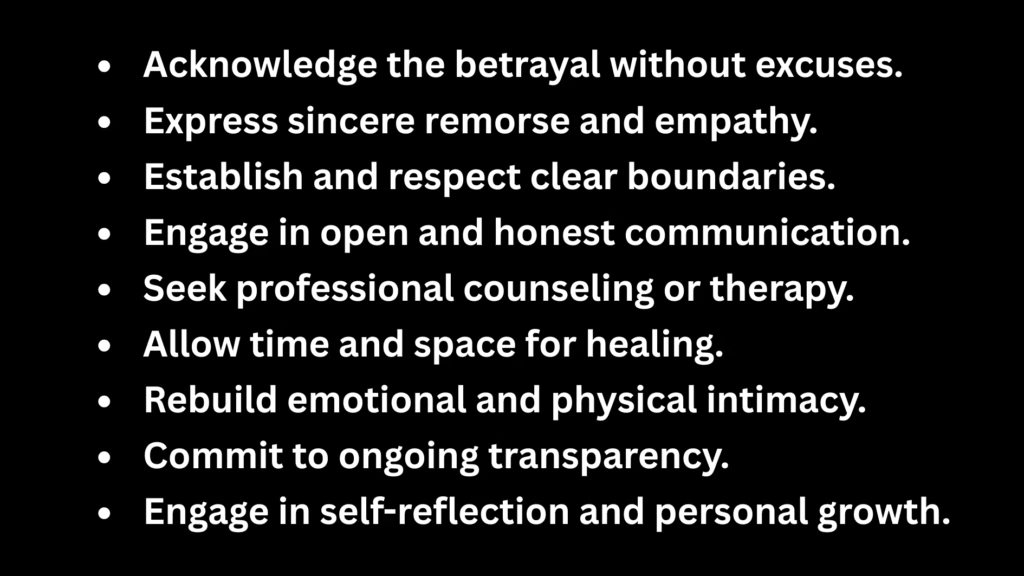
🤔 FAQ’s : Building Trust in Marriage
1. Can trust be fully restored after betrayal?
Yes, with consistent effort, open communication, and mutual commitment, many couples successfully rebuild trust.
2. How long does it take to rebuild trust?
The timeline varies, but research suggests it can take several months to a few years, depending on the individuals and circumstances.
3. Should we stay together after infidelity?
This decision is personal. Many couples choose to work through the betrayal and emerge stronger, while others may decide to part ways.
4. Is therapy necessary?
While not mandatory, therapy provides tools, guidance, and a safe space to navigate complex emotions and rebuild trust.
5. How can we rebuild intimacy?
Start with small gestures of affection, engage in shared activities, and communicate openly about needs and desires. Kevon Owen Counseling
6. What if the betrayed partner can’t forgive?
Forgiveness is a process and may take time. It’s essential to be patient and allow emotions to unfold naturally.
7. How do we handle triggers and reminders?
Identify triggers, communicate about them, and develop coping strategies together. Therapy can also assist in this process.
8. Can we rebuild trust without discussing the betrayal?
Avoiding the topic can hinder healing. Open discussions, when both partners are ready, are crucial for rebuilding trust.
💡 Final Words: Hope and Healing Are Possible
Building trust in marriage after betrayal isn’t a simple path. It’s an emotional rollercoaster filled with moments of doubt and glimpses of hope. But it’s also a testament to the strength of the human heart and the resilience of love.
💞 You don’t have to go through this journey alone. Surround yourself with supportive friends, lean on professionals who can guide you, and, most importantly, stay honest with yourself and your partner.
Every couple’s healing journey looks different, but the common thread is the unwavering desire to reconnect and heal together. If you’re reading this, you’re already taking a powerful step: acknowledging the pain and seeking the tools to rise above it.
Hold on to that hope—it’s the light that will guide you through the darkness. You can rebuild trust, piece by piece, day by day. And one day, you may find that your relationship isn’t just surviving, but thriving—deeper, more authentic, and more connected than ever before.
If you’d like personalized guidance and resources, check out the eBook “Rebuild Your Relationship” at www.storedigipro.in. You deserve to love and be loved in a relationship that feels safe, fulfilling, and whole.
Have you experienced rebuilding trust after betrayal? What helped you most on your journey? Share your insights, questions, or reflections in the comments below. Your story might inspire someone else who is just starting to mend the pieces.
Remember, healing isn’t about perfection—it’s about progress. And every small step you take is a testament to your courage and the power of love.
Useful Articles :-
- Signs of Love Bombing: 7 Red Flags to Spot Manipulative Affection Early
- What Is a Situationship? 7 Unfiltered Truths About Modern Love
- 10 Signs of a Healthy Relationship: What To Look For
- Communication Skills for Couples: 7 Transformative Tips to Strengthen Your Connection
- 7 Powerful Ways to Build Healthy Relationship Boundaries for Lasting Love
- 9 Empowering Steps for Recovering from a Breakup: Heal, Grow, and Thrive
- 7 Powerful Long-Distance Relationship Advice : Tips to Keep the Spark Alive
- Jealousy in Relationships: 7 Powerful Ways to Manage the Green-Eyed Monster
- 5 Insights Into Love Languages in Relationships : Do They Really Work?
- What Does Emotional Safety In Relationships? 7 Biblical Keys to Building Trust and Intimacy