Dealing with jealousy can feel like an emotional rollercoaster—one moment you’re basking in love, and the next, you’re overwhelmed by doubt and insecurity. But here’s the truth: jealousy is a natural emotion, and when addressed constructively, it can become a catalyst for deeper connection and trust in your relationship.

Understanding Jealousy: A Double-Edged Sword
Jealousy often stems from fear—fear of loss, inadequacy, or abandonment. It’s not inherently bad; in fact, it can signal areas in our relationships that need attention. However, when left unchecked, it can lead to controlling behaviors, resentment, and emotional distance.
A recent survey by Our Watch highlighted that many young individuals normalize jealousy and controlling behaviors, mistaking them for signs of love or care. This underscores the importance of recognizing and addressing jealousy healthily.
Strategy 1: Embrace Open Communication
Transparent conversations are the bedrock of trust. When feelings of jealousy arise:
-
Use “I” Statements: Express your feelings without blaming. For example, “I feel insecure when…” instead of “You make me feel…”.
-
Schedule Regular Check-ins: Set aside time to discuss feelings, ensuring both partners feel heard and valued.
-
Seek Clarification: If something triggers jealousy, ask questions to understand rather than assume.
Real-Life Example: Consider a couple where one partner feels uneasy about the other’s close friendship with a colleague. Instead of harboring resentment, they discuss boundaries and agree on what’s comfortable for both, strengthening their bond.
Strategy 2: Cultivate Self-Awareness
Understanding the root of your jealousy is crucial. Often, it reflects personal insecurities or past traumas.
-
Reflect on Past Experiences: Identify patterns or events that may influence your current feelings.
-
Practice Mindfulness: Engage in activities like meditation to stay present and reduce overthinking.
-
Seek Professional Help: Therapists can provide tools to navigate deep-seated issues contributing to jealousy.
Expert Insight: Dr. Brandy Engler notes that jealousy often arises from fear of loss or ego-related concerns, emphasizing the need for self-reflection.
Strategy 3: Set Healthy Boundaries
Establishing clear boundaries fosters security and mutual respect.
-
Define Acceptable Behaviors: Discuss what’s comfortable regarding interactions with others.
-
Respect Privacy: Avoid invasive actions like checking each other’s phones without consent.
-
Revisit Boundaries Regularly: As relationships evolve, so should the agreed-upon boundaries.
Case Study: In polyamorous relationships, clear boundaries are vital. A Reddit user shared how setting and respecting boundaries helped them manage jealousy and build trust.
Strategy 4: Focus on Personal Growth
Building self-esteem reduces reliance on external validation.
-
Pursue Individual Interests: Engage in hobbies or activities that bring personal fulfillment.
-
Celebrate Achievements: Recognize and appreciate your accomplishments, big or small.
-
Practice Self-Compassion: Treat yourself with kindness, especially during challenging times.
Research Highlight: A study found that individuals who engage in playful behaviors experience less emotional jealousy, suggesting that personal joy can buffer against negative emotions.
Strategy 5: Reframe Jealousy as a Signal
Instead of viewing jealousy as a threat, see it as an indicator of areas needing attention.
-
Identify Triggers: What situations or behaviors spark jealousy?
-
Assess Needs: Determine what you’re lacking—be it attention, reassurance, or connection.
-
Communicate Desires: Share your needs with your partner constructively.
Expert Advice: Dr. Alexandra Solomon emphasizes that jealousy can serve as a compass, guiding couples to areas requiring growth and understanding.
Strategy 6: Limit Social Media Exposure
Platforms can exacerbate jealousy through curated portrayals of others’ lives.
-
Set Boundaries: Decide on acceptable online behaviors, like not following ex-partners.
-
Take Breaks: Periodically disconnect to focus on real-life connections.
-
Avoid Comparisons: Remember that social media often showcases highlights, not realities.
Insight: A study highlighted that excessive social media use can lead to increased jealousy and decreased relationship satisfaction.
Strategy 7: Seek External Support
Sometimes, external guidance is necessary to navigate complex emotions.
-
Couples Therapy: A neutral party can facilitate productive conversations and offer strategies.
-
Support Groups: Sharing experiences with others facing similar challenges can provide comfort and insights.
-
Educational Resources: Books, podcasts, and workshops can offer tools to manage jealousy effectively.
Resource Recommendation: Dr. Joli Hamilton’s podcast provides valuable insights into managing jealousy in relationships.
Comparison Table: Jealousy vs. Envy
| Aspect | Jealousy | Envy |
|---|---|---|
| Definition | Fear of losing something you have | Desire for something someone else possesses |
| Emotion Triggered | Insecurity, fear | Resentment, longing |
| Relationship Impact | Can lead to controlling behaviors | May cause bitterness or resentment |
| Management | Open communication, self-awareness | Gratitude, focusing on personal growth |
Jealousy Management Checklist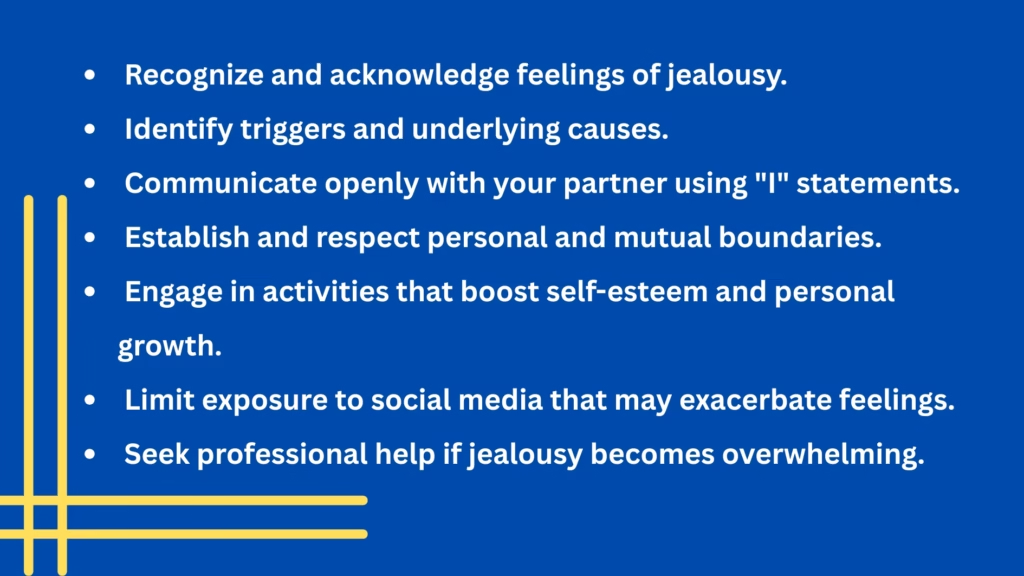
FAQ’s : Dealing With Jealousy
Q1.What causes jealousy in relationships?
Jealousy often arises from fears of loss, insecurity, or past traumas. It can also stem from low self-esteem or unmet emotional needs.
Q2.Is jealousy always harmful?
Not necessarily. When addressed constructively, jealousy can highlight areas needing attention and foster deeper connection.
Q3.How can I differentiate between healthy and unhealthy jealousy?
Healthy jealousy is occasional and leads to constructive conversations. Unhealthy jealousy is persistent, leads to controlling behaviors, and damages trust.
Yes. Constant exposure to curated images and interactions can lead to comparisons and insecurities.
Q5.How do attachment styles influence jealousy?
Individuals with anxious or avoidant attachment styles may experience heightened jealousy due to fears of abandonment or intimacy issues.
Q6.What is retroactive jealousy?
It’s an obsession with a partner’s past relationships, leading to intrusive thoughts and comparisons.
Q7.Can therapy help in managing jealousy?
Absolutely. Therapy provides tools to understand and manage underlying causes of jealousy.
Q8.How can I support a partner struggling with jealousy?
Offer reassurance, maintain open communication, and encourage seeking professional help if needed.dailytelegraph.com.au+1nypost.com+1
Q9.Is it okay to feel jealous occasionally?
Yes. Occasional jealousy is natural. The key is how you address and manage it.
Q10.Can jealousy ever strengthen a relationship?
When addressed constructively, it can lead to deeper understanding and stronger emotional bonds.
Final Thoughts
Dealing with jealousy is a journey of self-discovery and growth. By embracing open communication, setting boundaries, and focusing on personal development, you can transform jealousy from a destructive force into a tool for building trust and intimacy. Remember, it’s not about eliminating jealousy but understanding and managing it constructively.
Special Advice
If you find jealousy overwhelming, consider journaling your feelings to identify patterns and triggers. Engage in gentle self-talk, reminding yourself of your worth and the love that exists within your relationship. Affirmations like, “I am enough,” and “My partner chooses me for a reason,” can be powerful tools in calming those swirling doubts.
And remember—healing isn’t linear. There will be days when you feel strong and secure, and others when old fears resurface. Be patient with yourself. Healing from jealousy isn’t about perfection; it’s about progress. It’s about learning to hold your heart with tenderness and letting trust guide you forward, step by step.
Call to Action
If this article resonated with you and you’d like to explore these strategies in more detail or share your own story, I’d love to hear from you! 💌 Comment below with your experiences, insights, or questions—let’s create a supportive space where we can all grow together.
Remember, dealing with jealousy doesn’t make you weak or unworthy—it makes you human. It shows that you care deeply and want to protect something precious. Embrace this journey with curiosity and compassion, and let it lead you toward a stronger, more secure relationship.
Useful Articles :-
- Signs of Love Bombing: 7 Red Flags to Spot Manipulative Affection Early
- What Is a Situationship? 7 Unfiltered Truths About Modern Love
- 10 Signs of a Healthy Relationship: What To Look For
- Communication Skills for Couples: 7 Transformative Tips to Strengthen Your Connection
- 7 Powerful Ways to Build Healthy Relationship Boundaries for Lasting Love
- 9 Empowering Steps for Recovering from a Breakup: Heal, Grow, and Thrive
- 7 Powerful Long-Distance Relationship Advice : Tips to Keep the Spark Alive
- Jealousy in Relationships: 7 Powerful Ways to Manage the Green-Eyed Monster
- 5 Insights Into Love Languages in Relationships : Do They Really Work?
- What Does Emotional Safety In Relationships? 7 Biblical Keys to Building Trust and Intimacy