When your family not accepting relationship, the emotional toll may be too much to bear. Every moment feels like a tug-of-war between the person you have chosen to love and the people you love the most—the tension, the disagreements, the quiet. It goes beyond simple disapproval. Identity, loyalty, fear, and the silent anguish of being split in two are all significant themes. In order to help you recover peace and go through one of the most difficult struggles you will ever encounter, this article breaks down this unpleasant reality and provides helpful tactics, emotional support, and professional advice.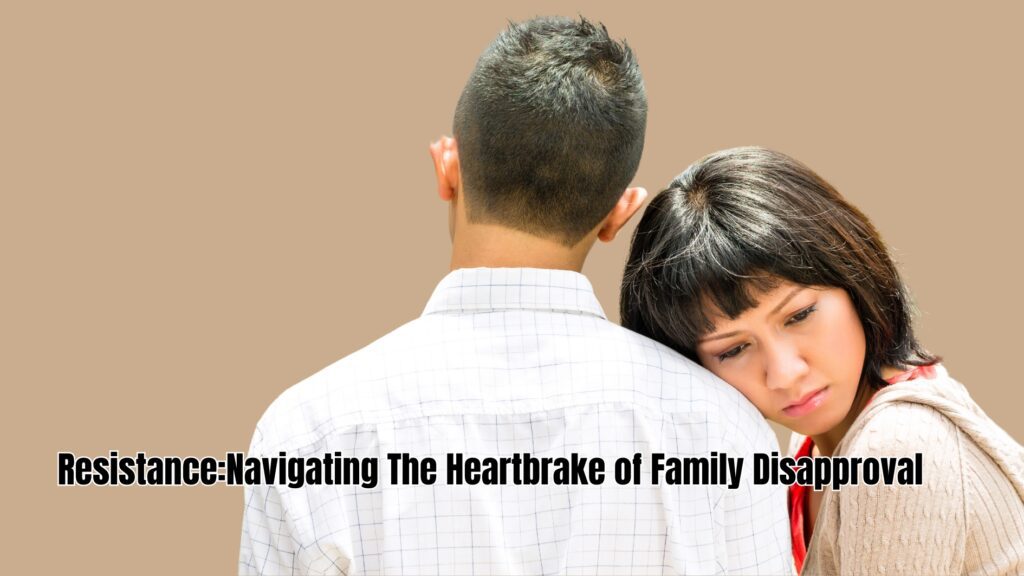
Why Families Struggle to Accept Relationships
1. Cultural and Generational Expectations
Tradition is one of the most frequent grounds for refusal. When it comes to compatibility, older generations frequently hold strong opinions regarding caste, religion, race, and socioeconomic standing.
💬 Real-Life Example: Priya, a 28-year-old Indian woman in London, fell in love with a Pakistani Muslim man. Her Hindu parents disapproved because of religious differences. Despite both being educated and deeply in love, the couple faced years of resistance.
Key Insight:
Sometimes, it’s not about your partner’s character—but the cultural script your family is trying to follow.
2. Fear of Social Judgment
Many parents are worried about “what people will say.” It’s not necessarily about you or your partner—it’s about societal perception.
💬 Real-Life Example: In a suburb of Texas, Jake’s parents couldn’t accept his boyfriend, not because they didn’t see their love, but because of their fear of gossip in their church community.
Expert View:
Dr. Sharon Marcus, a family therapist in New York, explains, “When families disapprove of a partner, it’s often a projection of their fears—not an objective assessment of the relationship.”
How It Affects You Emotionally and Mentally
1. Internal Conflict and Anxiety
When you’re caught between love and loyalty, anxiety sets in. Sleepless nights, overthinking, and guilt become your constant companions.
2. Identity Crisis
You might start questioning your choices or feel like you’re betraying your roots.
3. Strained Family Bonds
This situation can lead to estrangement, awkward holidays, and deep emotional scars that last decades.
Comparison Table: When Family Accepts vs. Rejects a Relationship
| Aspect | Family Accepts Relationship | Family Rejects Relationship |
|---|---|---|
| Emotional Stability | High, less stress | High stress, emotional burnout |
| Family Gatherings | Joyful and inclusive | Tense or avoided |
| Decision-Making Support | Present and guided | Isolated, second-guessing decisions |
| Relationship Growth | Encouraged and celebrated | Secretive or defensive |
| Mental Health | Generally positive | Anxiety, depression, self-doubt |
What To Do When Your Family Doesn’t Accept Your Relationship
1. Open a Dialogue Without Expectations
Start by calmly asking your family about their concerns. Listen—not to agree—but to understand.
💬 Example: “Mom, I know you’re uncomfortable with Alex, but I want to understand why. Can we talk without judgment?”
Expert Tip:
According to a 2023 study by the Family Dynamics Research Institute, 63% of conflicted families showed improved communication when adult children initiated non-confrontational conversations.
Sometimes, your family’s reaction stems from ignorance, not hate. Share your partner’s story. Let them see the human being behind the label.
3. Set Emotional Boundaries
Protect your mental health. Make it clear that while you respect their feelings, your relationship is your choice.
💬 Example: “I love you, but I need space if you continue disrespecting my partner.”
4. Seek a Mediator or Therapist
Invite your family to counseling. It helps break generational communication barriers and provides a neutral space for healing.
Resource:
BetterHelp, a leading therapy platform, offers licensed family therapists experienced in cross-cultural and intergenerational issues.
Case Study: Rebuilding Acceptance
✨ Case Study – Amelia and Rahim:
Amelia, from Ohio, married Rahim, a Syrian refugee. Her conservative parents refused to attend the wedding. But through persistent, respectful efforts—letters, therapy sessions, and time—they reconnected after 3 years. Today, Rahim celebrates Christmas with them every year.
Takeaway:
Change doesn’t happen overnight—but love with patience often softens even the hardest hearts.
Checklist: Your Survival Guide When Facing Rejection
✔ Acknowledge your emotions without shame
✔ Talk to a trusted friend or therapist
✔ Have clear conversations with your family
✔ Stay respectful, even when they’re not
✔ Don’t force acceptance—give it time
✔ Lean into your partner for strength
✔ Revisit the conversation after some space
✔ Prioritize your mental health
✔ Know when to disengage from toxic patterns
✔ Remind yourself—your love is valid
Recent Research Findings
📌 A 2024 global survey by Relationship Matters Institute found:
-
58% of couples face some level of family disapproval.
-
41% of those couples said their bond strengthened as a result of facing adversity together.
-
29% of families eventually accepted the relationship after open communication and time.
FAQs : Family Not Accepting Relationship
1. Why is my family not accepting my relationship?
They may be influenced by cultural norms, fear of social stigma, or personal biases—not necessarily your partner’s behavior.
2. Should I leave my partner if my family disapproves?
Not immediately. Evaluate the reasons. If your partner is respectful and loving, consider counseling and open dialogues before making decisions.
3. How can I stay strong during this emotional phase?
Build a support system of friends, seek therapy, and engage in self-care activities that ground you.
4. Will my family ever change their mind?
It’s possible. Many families come around with time, education, and consistent, respectful communication.
5. Is it wrong to choose love over family?
No. Your life is yours. Healthy boundaries and emotional maturity should guide your decision.
6. What if my family’s rejection turns abusive or toxic?
Distance might be necessary. Your safety—emotional and physical—comes first.
7. Can professional mediation really help?
Yes. Therapists trained in family conflict often help bridge the gap in values and expectations.
8. Should I hide my relationship to avoid conflict?
Temporary discretion may help in extreme situations, but long-term secrecy can breed resentment.
9. How do I help my partner cope with my family’s rejection?
Be transparent, reassure them, and never let them feel like a secret or a burden.
10. Are there online resources or communities for support?
Yes. Try Reddit’s r/relationship_advice or Love Is Respect for real-world support and stories.
Conclusion: You Deserve Both Love and Respect
When you’re dealing with family not accepting relationship, keep in mind that other people’s opinions do not determine your value. You may defend your lover and still love your family. These two things only need strength, patience, and occasionally distance; they are not mutually exclusive. Reunion is not always a prerequisite for healing. It can occasionally imply overcoming opposition to grow gracefully.
🌱 Your narrative counts. And love deserves to blossom, even if it has to squeak through the cracks, because it is based on authenticity and respect.
Useful Articles :-
- Signs of Love Bombing: 7 Red Flags to Spot Manipulative Affection Early
- What Is a Situationship? 7 Unfiltered Truths About Modern Love
- 10 Signs of a Healthy Relationship: What To Look For
- Communication Skills for Couples: 7 Transformative Tips to Strengthen Your Connection
- 7 Powerful Ways to Build Healthy Relationship Boundaries for Lasting Love
- 9 Empowering Steps for Recovering from a Breakup: Heal, Grow, and Thrive
- 7 Powerful Long-Distance Relationship Advice : Tips to Keep the Spark Alive
- Jealousy in Relationships: 7 Powerful Ways to Manage the Green-Eyed Monster
- 5 Insights Into Love Languages in Relationships : Do They Really Work?
- What Does Emotional Safety In Relationships? 7 Biblical Keys to Building Trust and Intimacy