Maintaining my independence is a lifeline in a relationship, not just a fancy term. It’s the capacity to remain loyal to who you are, pursue your own goals, and still give your all for the person you care about. A vibrant partnership where both hearts flourish is created when the scales of intimacy and independence are balanced.
I know firsthand how simple it is to lose yourself in love and to let someone else’s desires overpower your own voice. The problem is that independence does not equate to selfishness. It’s self-respect. It’s the fuel that keeps your relationship’s fire blazing brightly without putting out the fire that is your identity.
For a more wholesome and satisfying relationship, learn to strike a balance between love and individual liberty. Find true tales, professional guidance, and actionable steps to reclaim your independence without losing the magic of connection.
Here’s how you can do it.
1. Embrace Open Communication and Boundaries
Practice the Art of Honest Conversations
-
Why it matters: Without open dialogue, you risk slipping into people-pleasing or resentment.
-
Real-life example: My friend Lily, a graphic designer in New York, found herself constantly adjusting her plans for her boyfriend. She realized she was losing sight of what she wanted. Through open conversations, she and her partner set boundaries, which allowed her to reconnect with her own passions—like painting on weekends—while still nurturing their love.
Boundaries Are Bridges, Not Walls
-
Set clear boundaries:
-
Alone time for hobbies and growth.
-
Respect for each other’s social circles.
-
Space to make decisions without guilt.
-
-
Use phrases like:
-
“I love you, but I need a night to recharge.”
-
“Let’s support each other’s goals.”
-
Expert insight:
Dr. Andrea Bonior, a clinical psychologist, says,
“Boundaries create safety and trust. They’re essential to avoid losing yourself in the relationship.”
Read her full insights here: Psychology Today: How to Set Boundaries.
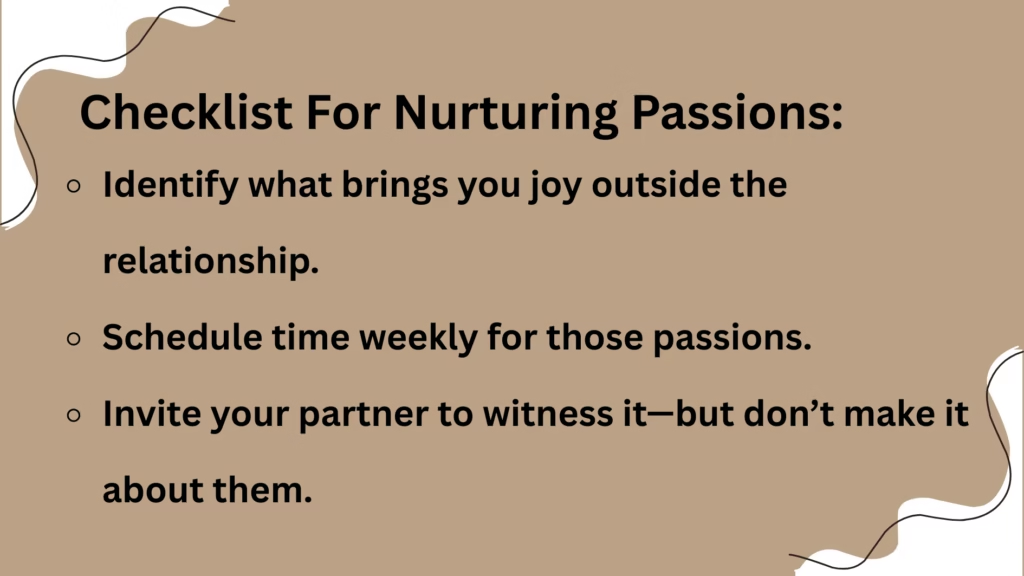
2. Keep Pursuing Your Passions
Feed Your Soul to Feed the Relationship
-
Real-life example: Josh, a chef from Sydney, kept playing guitar in his band even after moving in with his girlfriend. “Music is my therapy,” he shared in an interview. “When I stopped playing, I felt lost. Now, she comes to my gigs, and it brings us closer.”
3. Build a Support System Beyond Your Partner
Friends and Family Are Essential
-
Why it matters: Depending solely on your partner for emotional needs can create pressure and strain.
-
Research-backed insights: A 2024 Harvard study found that people with rich social networks reported higher relationship satisfaction and fewer arguments.
-
Practical example: Call your best friend for a chat about your promotion. Lean on your sister when you’re feeling low. This strengthens your personal identity and reduces the burden on your romantic partner.
Comparison Table – Partner vs. Support System
| Aspect | Partner | Support System |
|---|---|---|
| Emotional Support | Deep, intimate, love-based support | Diverse, fresh perspectives |
| Time Commitment | Daily closeness | Scheduled catch-ups |
| Personal Growth | Shared dreams and experiences | Different viewpoints & growth areas |
| Balance of Power | Equal partnership, compromise | No need for compromise, just venting |
4. Practice Financial and Emotional Independence
H3: Money Matters in Love
-
Emotional tone: It’s easy to tie your worth to your partner’s financial decisions. But sharing finances doesn’t mean you must give up your say.
-
Real-life example: Anita and Sam, a couple from Toronto, created separate savings accounts to fund their solo travel adventures. They also have a joint account for shared expenses. This gave them a sense of security and excitement for personal goals.
Emotional Freedom is Key
-
Advice from relationship coach Tara Fields:
“Co-dependence is not love. When you rely on your partner for validation, you give away your power.”
-
Action step: Practice self-compassion exercises. For example, write a gratitude list about yourself every morning.
5. Honor Your Identity Every Day
Stay True to Yourself
-
Emotional tone: It’s easy to forget the quirks that make you… you. But those quirks are what your partner fell in love with.
-
Checklist for staying true to yourself:
-
Keep a journal of your hopes and fears.
-
Don’t be afraid to say no.
-
Wear what makes you feel amazing, not just what your partner likes.
-
Case Study – Reclaiming Independence
-
Story: Rhea, a yoga teacher in London, found herself absorbed in her boyfriend’s world—watching football, going to his gigs. “I didn’t even like sports!” she laughs.
-
Action step she took: She started attending solo yoga retreats again. Her partner supported it because he saw her happier and more confident.
FAQs : Maintaining My Independence
1. How do I balance my independence with my partner’s needs?
Start by openly discussing your needs and setting boundaries. Remember: healthy compromise doesn’t mean erasing yourself.
2. Can maintaining my independence hurt my relationship?
No, if done with love and respect. Independence enriches your relationship by making both partners more whole and interesting.
3. What if my partner feels threatened by my independence?
Reassure them it’s not about shutting them out. Show how your independence actually strengthens your love.
4. What are small ways to maintain independence daily?
-
-
Morning journaling
-
Solo walks or coffee dates
-
Personal creative projects
-
5. Can I maintain independence if we live together?
Yes! Create your own corners—like a reading nook or hobby area. Honor each other’s personal space.
6. How does independence impact emotional intimacy?
Independence fuels emotional intimacy. When you know yourself, you can love more deeply.
7. How do I communicate that I need space without hurting my partner?
Use “I” statements: “I need this for me, and I’ll come back to you even more present and loving.”
8. Should I have separate social lives?
Yes! Separate social lives create fresh stories to share and reduce the strain of constant togetherness.
9. Can independence help in long-distance relationships?
Absolutely! It helps you avoid clinging and creates a sense of adventure and trust.
10. Is maintaining independence the same as wanting to be single?
No. Independence is about staying true to yourself within the relationship—not about being alone.
Final Thought
Maintaining my independence in a relationship is the secret sauce to lasting love. It’s about choosing to stand on your own feet—strong and proud—while still holding hands with your partner. It’s not easy, but it’s worth it. Because the most beautiful love stories are written by two people who never stop being themselves.
Special Helpful Advice for Readers
Take one small step this week. Sign up for a class, call an old friend, or block out an hour for your own project. Independence grows one choice at a time—and each choice brings you closer to a fulfilling relationship.
Call to Action
Loved these tips? Share your own journey of maintaining independence in the comments! Let’s create a community that celebrates love without losing ourselves.
Useful Articles :-
- Signs of Love Bombing: 7 Red Flags to Spot Manipulative Affection Early
- What Is a Situationship? 7 Unfiltered Truths About Modern Love
- 10 Signs of a Healthy Relationship: What To Look For
- Communication Skills for Couples: 7 Transformative Tips to Strengthen Your Connection
- 7 Powerful Ways to Build Healthy Relationship Boundaries for Lasting Love
- 9 Empowering Steps for Recovering from a Breakup: Heal, Grow, and Thrive
- 7 Powerful Long-Distance Relationship Advice : Tips to Keep the Spark Alive
- Jealousy in Relationships: 7 Powerful Ways to Manage the Green-Eyed Monster
- 5 Insights Into Love Languages in Relationships : Do They Really Work?
- What Does Emotional Safety In Relationships? 7 Biblical Keys to Building Trust and Intimacy