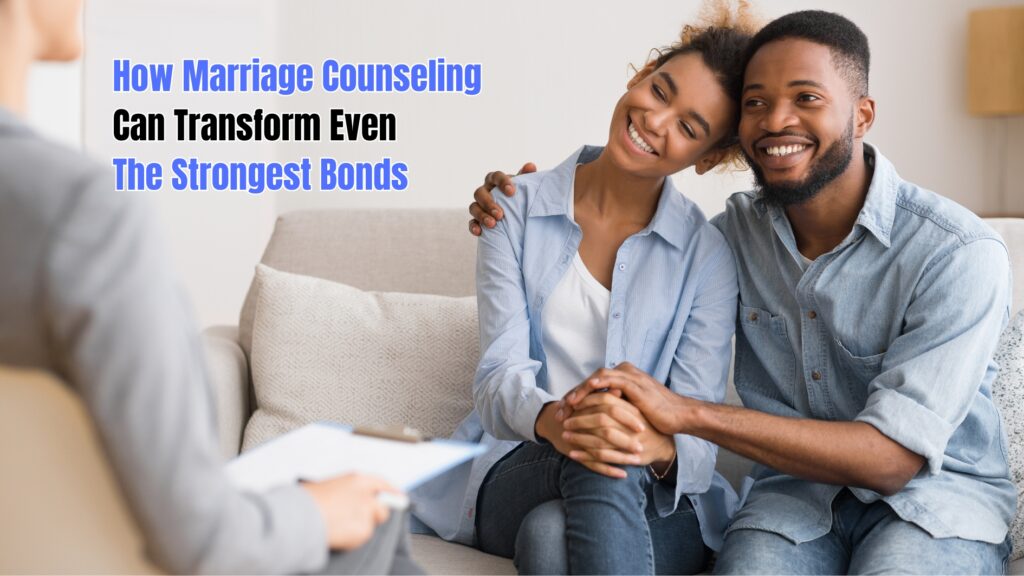
Marriage counseling benefits are not limited to couples who are about to split up. In actuality, with a little expert assistance, some of the most satisfying relationships are based on a shared willingness to develop, think, and deal with the unexpected. Knowing the unspoken benefits of counseling can completely change the way you interact, regardless of how long you’ve been married or how recently you were married.
This post will explore five lesser-known yet emotionally impactful advantages of marriage counseling, supported by firsthand accounts, professional opinions, and recent studies. Let’s dispel the stigma and celebrate the joy of improving your love rather than merely existing in it.
Why Consider Marriage Counseling Even When Things Seem Fine?
“Counseling is for couples in crisis” is a prevalent misconception. In actuality, getting help before problems get out of hand can improve communication, emotional intimacy, and resilience. Marriage counseling provides preventative treatment for your relationship, much like regular health examinations.
💬 “Healthy couples are proactive, not reactive,” says Dr. Alicia Monroe, a licensed family therapist in Toronto. “They understand that growth doesn’t wait for things to break.”
1. Strengthens Communication in Unimaginable Ways
From Talking to Truly Understanding Each Other
One of the most unexpected marriage counseling benefits is learning to really communicate. Many couples think they’re good at expressing themselves—until they enter therapy.
Real-Life Example:
Jack and Priya, married for five years in the UK, thought they had excellent communication. But during a session, Priya admitted she often felt unheard. Jack, shocked, realized he interrupted without noticing. With their therapist’s help, they practiced active listening—taking turns to speak, reflect, and respond without judgment.
Checklist: Signs You May Need to Improve Communication
- You finish your partner’s sentences often
- Arguments loop without resolution
- One or both of you “shut down” during talks
- Conversations are surface-level or overly sarcastic
✅ Tip: Use “I feel” statements instead of “You always…”
2. Helps Heal Past Emotional Wounds (Even Ones You Forgot)
The Invisible Baggage Couples Carry
Everyone enters marriage with emotional baggage—childhood traumas, ex-relationships, or unspoken insecurities. Counseling brings these into the light gently.
Case Study:
Jorge and Amanda from San Diego sought therapy to navigate parenting stress. But sessions uncovered Jorge’s deep-seated fear of abandonment, rooted in his parents’ divorce. Recognizing this pattern helped Amanda understand his need for constant reassurance—previously labeled as “clingy.”
Expert Insight:
“Emotional wounds don’t vanish with time—they get buried,” says Dr. Linh Wei, trauma specialist in Singapore. “Therapy makes healing possible in safe ways.”
3. Boosts Intimacy Beyond the Physical
Reigniting the Spark with Emotional Closeness
Another often-overlooked benefit of marriage counseling is the rekindling of emotional and physical intimacy. Not just sex—but connection, affection, and feeling “seen.”
Real-Life Story:
Maya and Chris, a couple in Cape Town, found their once-passionate marriage turning platonic. Through guided intimacy-building exercises, they rediscovered non-sexual touch, handwritten notes, and date nights with phones off. That emotional bridge brought their physical intimacy back to life.
🔥 “Intimacy is built in the micro-moments,” notes Dr. Ella Spencer, a relationship coach from Melbourne. “Marriage counseling reminds couples how to create those moments intentionally.”
4. Equips You with Conflict-Resolution Tools You’ll Use for Life
Fighting Fair (Yes, There’s a Method to It)
One major marriage counseling benefit is learning how to argue productively. Disagreements are inevitable. But destructive patterns—yelling, blame, withdrawal—can erode love.
Comparison Table: Toxic vs. Healthy Conflict Styles
| Toxic Conflict Behaviors | Healthy Alternatives (Taught in Counseling) |
|---|---|
| Blame and shame | Express feelings without accusations |
| Silent treatment | Take intentional time-outs, then reconnect |
| Bringing up the past | Stay present-focused, use repair statements |
| Escalation | Use de-escalation tools like breathing or humor |
Practical Tool:
Use the “XYZ” formula—“When you do X in situation Y, I feel Z”—to express needs calmly.
5. Helps You Grow as Individuals (Not Just as a Couple)
Discovering Yourself in the Relationship
Marriage counseling isn’t only about “us”—it’s about “me” too. You’ll uncover how your personal patterns, dreams, and triggers affect the relationship. This self-awareness fosters deeper growth and empathy.
Example:
In Dubai, Elena realized through therapy that she had been subconsciously mimicking her mother’s controlling behavior. Her husband, Omar, felt suffocated but couldn’t express it. Counseling helped Elena soften, and Omar felt safe opening up.
Latest Research:
A 2023 study from Stanford University found that 91% of couples in therapy reported individual self-growth as a key outcome—not just relational satisfaction.
Expert Interviews: What the Pros Say
Dr. Karen Lin, Licensed Marriage Therapist, Vancouver
“People underestimate the ripple effect of therapy. Healthier marriages lead to better parenting, work productivity, and even physical health.”
David Rojas, Relationship Coach, Mexico City
“Even one session can shift a mindset. Don’t wait until it’s too late—use counseling as enrichment, not rescue.”
External Resources You Can Trust
- The Gottman Institute – Pioneers in couples therapy, founded by Drs. John and Julie Gottman.
- Psychology Today: Find a Therapist – Global directory for licensed counselors.
- American Association for Marriage and Family Therapy – Trusted resource on family and marriage therapy practices.
💡These organizations have decades of expertise in marriage research, clinical practices, and tools to improve relationships.
✅ Reader Checklist: Are You Ready for Marriage Counseling?
-
- We’ve hit a communication wall, and it’s getting frustrating
- Arguments feel repetitive and unresolved
- We want to prevent future issues, not just fix current ones
- I feel disconnected emotionally or physically
- We both are open (even slightly) to improving our bond
- We’re navigating big life transitions (kids, moving, grief, etc.)
If you checked even two boxes, it’s a good time to explore therapy.
FAQs : Marriage Counseling Benefits
1. Is marriage counseling only for struggling couples?
Not at all. Many strong couples use it to grow, prevent issues, and deepen emotional connection.
2. How long does it take to see results?
Some couples notice changes in a few sessions. Others benefit from longer journeys. It depends on your goals and effort.
3. What if my partner doesn’t want to go?
Start alone. Often, the other partner joins after seeing your commitment and the changes in you.
4. Can therapy save a marriage on the brink of divorce?
Sometimes. While not guaranteed, therapy creates a space for honest dialogue and potential reconciliation.
5. Does it only focus on communication?
No. It includes conflict resolution, intimacy, childhood patterns, and much more.
6. Is it expensive?
Costs vary by country and provider. Many offer sliding scale rates, and some insurance plans cover sessions.
7. What happens in the first session?
You’ll discuss your relationship history, current concerns, and goals with the therapist. It’s about setting a foundation.
8. Are online sessions as effective as in-person?
Yes. Studies show virtual counseling can be just as effective, especially when both partners are engaged.
9. Can we quit therapy anytime?
Absolutely. It’s voluntary, but consistency increases the chances of lasting impact.
10. How do we find a good counselor?
Use trusted platforms like Psychology Today or ask for referrals from friends or doctors.
Final Thoughts: The Courage to Grow Together
Marriage counseling benefits are about more than just solving issues; they’re about finding each other again, developing as people, and creating something strong and lovely. The best couples aren’t flawless; they’re just open to learning.
Counseling is therefore a gift you can give your relationship now, regardless of how stable or rocky it is. What’s the best part? Starting is never too early or too late.
Useful Articles :-
- Signs of Love Bombing: 7 Red Flags to Spot Manipulative Affection Early
- What Is a Situationship? 7 Unfiltered Truths About Modern Love
- 10 Signs of a Healthy Relationship: What To Look For
- Communication Skills for Couples: 7 Transformative Tips to Strengthen Your Connection
- 7 Powerful Ways to Build Healthy Relationship Boundaries for Lasting Love
- 9 Empowering Steps for Recovering from a Breakup: Heal, Grow, and Thrive
- 7 Powerful Long-Distance Relationship Advice : Tips to Keep the Spark Alive
- Jealousy in Relationships: 7 Powerful Ways to Manage the Green-Eyed Monster
- 5 Insights Into Love Languages in Relationships : Do They Really Work?
- What Does Emotional Safety In Relationships? 7 Biblical Keys to Building Trust and Intimacy