Recognizing the signs of emotional abuse is crucial for anyone navigating the complexities of intimate relationships. Unlike physical abuse, emotional abuse often leaves no visible scars, making it harder to identify and address. Yet, its impact on mental health and self-worth can be profound and long-lasting.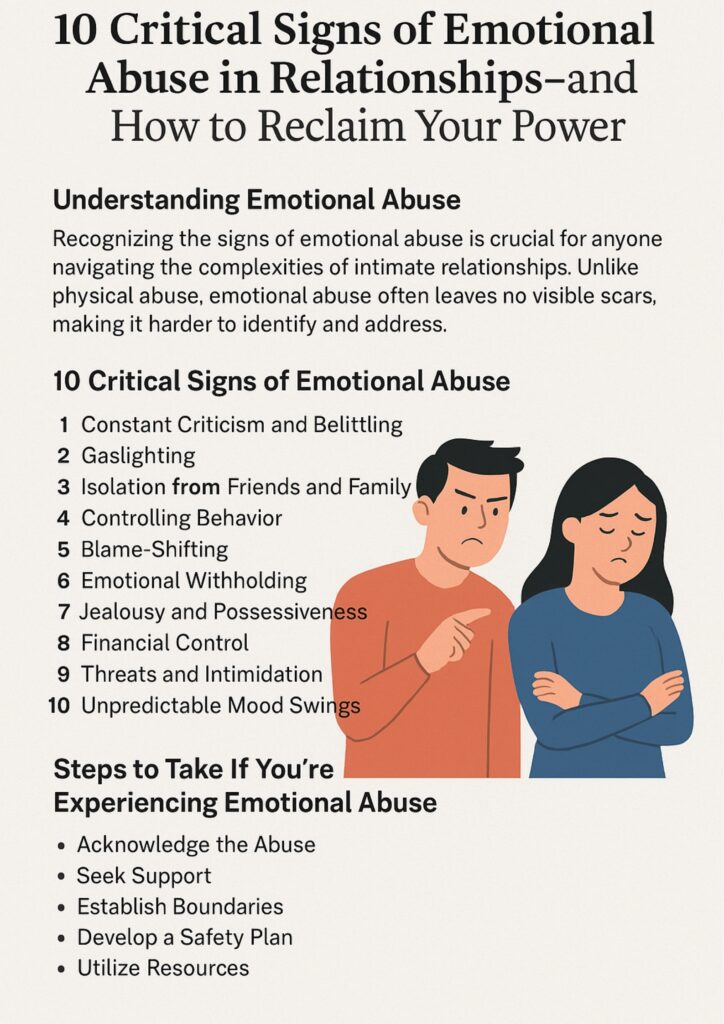
Understanding Emotional Abuse
Emotional abuse involves patterns of behavior aimed at controlling, manipulating, or belittling another person. It can manifest in various forms, including verbal assaults, constant criticism, isolation from friends and family, and gaslighting. The abuser’s goal is often to undermine the victim’s confidence and autonomy, creating a sense of dependency and helplessness. SELF
10 Critical Signs of Emotional Abuse
1. Constant Criticism and Belittling
An emotionally abusive partner may consistently demean or ridicule you, often under the guise of “joking” or “constructive criticism.”Eddins Counseling+1Canadian Women’s Foundation+1
Example: Your partner frequently mocks your appearance or intelligence, making you feel inadequate.
2. Gaslighting
Gaslighting involves manipulating someone into doubting their perceptions or memories, leading to confusion and self-doubt. New York Post
Example: You recall a conversation clearly, but your partner insists it never happened, making you question your sanity.
3. Isolation from Friends and Family
Abusers often attempt to cut off their partners from support networks to increase control.SELF+2New York Post+2Wikipedia+2
Example: Your partner discourages you from spending time with loved ones, claiming they are a “bad influence.”
4. Controlling Behavior
This includes dictating your actions, choices, or even thoughts, often under the pretense of concern or love.
Example: Your partner insists on knowing your whereabouts at all times and becomes angry if you don’t check in.
5. Blame-Shifting
Abusers rarely take responsibility for their actions, instead blaming you for their behavior.
Example: After an argument, your partner claims it’s your fault for “making them angry.”DomesticShelters.org+24The Hotline+24Wikipedia+24
6. Emotional Withholding
This involves deliberately withholding affection, approval, or communication to punish or control. Dr Elaine Ryan
Example: Your partner gives you the silent treatment for days after a disagreement.
7. Jealousy and Possessiveness
Excessive jealousy can be a sign of insecurity and a desire to control.
Example: Your partner accuses you of flirting whenever you talk to someone of the opposite sex.
8. Financial Control
Restricting access to finances is a common tactic to maintain power.
Example: Your partner controls all the money and gives you an allowance, questioning every expense.
9. Threats and Intimidation
This includes threatening harm to you, themselves, or others to manipulate your behavior.
Example: Your partner threatens to harm themselves if you consider leaving the relationship.
10. Unpredictable Mood Swings
Sudden shifts from affection to anger can keep you on edge and anxious.
Example: Your partner is loving one moment and furious the next, without clear reason.
Comparison Table: Healthy vs. Emotionally Abusive Relationships
| Aspect | Healthy Relationship | Emotionally Abusive Relationship |
|---|---|---|
| Communication | Open, honest, and respectful | Manipulative, critical, or silent treatment |
| Trust | Mutual and consistent | Jealousy, accusations, and distrust |
| Support | Encouragement of personal growth | Undermining achievements and self-esteem |
| Independence | Respect for individual autonomy | Control over actions, decisions, and finances |
| Conflict Resolution | Constructive and fair | Blame-shifting, threats, and intimidation |
Steps to Take If You’re Experiencing Emotional Abuse
-
Acknowledge the Abuse: Recognizing the problem is the first step toward healing.
-
Seek Support: Talk to trusted friends, family, or a mental health professional.
-
Establish Boundaries: Clearly communicate your limits and stick to them.
-
Develop a Safety Plan: If necessary, plan how to safely leave the relationship.
-
Utilize Resources: Reach out to organizations that specialize in helping abuse survivors. The Sun+9Dr Elaine Ryan+9StrongHearts Native Helpline+9WomensLaw.org+4The Hotline+4Women’s Aid+4
External Resources
-
National Domestic Violence Hotline: Provides 24/7 confidential support and resources.
-
Women’s Aid: Offers information and support for women experiencing abuse.
-
Love is Respect: Focuses on educating young people about healthy relationships.Canadian Women’s Foundation+4Wikipedia+4The Hotline+4
FAQs : Signs of Emotional Abuse
1. What is emotional abuse?
Emotional abuse is a pattern of behavior that aims to control, manipulate, or belittle another person, often without physical violence.WebMD+4Wikipedia+4Psych Central+4
2. How can I tell if I’m in an emotionally abusive relationship?
Signs include constant criticism, gaslighting, isolation, and controlling behavior.New York Post+2Wikipedia+2SELF+2
3. Is emotional abuse as serious as physical abuse?
Yes, emotional abuse can have long-lasting psychological effects and is equally serious.
4. Can emotional abuse occur in non-romantic relationships?
Absolutely. It can happen in friendships, family relationships, and workplace settings.
5. Why is it hard to leave an emotionally abusive relationship?
Factors include fear, low self-esteem, financial dependency, and emotional attachment.
6. Can emotional abusers change?
Change is possible but requires the abuser to acknowledge their behavior and seek professional help.
7. How does emotional abuse affect mental health?
It can lead to anxiety, depression, PTSD, and a diminished sense of self-worth.
8. What should I do if I suspect someone is being emotionally abused?
Offer support, listen without judgment, and encourage them to seek professional help.
9. Are there legal protections against emotional abuse?
Laws vary by location, but some jurisdictions recognize emotional abuse in restraining orders and custody cases.
10. Where can I find help?
Resources like the National Domestic Violence Hotline and local shelters offer support and guidance.
Conclusion
Recognizing the signs of emotional abuse is the first step toward reclaiming your autonomy and well-being. If you or someone you know is experiencing such abuse, it’s essential to seek support and take action. Remember, you deserve a relationship built on respect, trust, and love.
Useful Articles :-
- 7 Powerful Ways to Build Healthy Relationship Boundaries for Lasting Love
- 9 Empowering Steps for Recovering from a Breakup: Heal, Grow, and Thrive
- 7 Powerful Long-Distance Relationship Advice : Tips to Keep the Spark Alive
- Jealousy in Relationships: 7 Powerful Ways to Manage the Green-Eyed Monster
- 5 Insights Into Love Languages in Relationships : Do They Really Work?
- What Does Emotional Safety In Relationships? 7 Biblical Keys to Building Trust and Intimacy
- Healing From Narcissistic Abuse : 7 Empowering Steps to Reclaim Your Life
- Infatuation Vs Love, What It is Exactly? Here’s How to Tell — 7 Crucial Signs to Watch For
- The Power of Emotional Validation in Relationship : 7 Truths You Can’t Ignore
- Why Setting Boundaries in Relationships Is the Most Loving Thing You Can Do