Toxic relationship patterns can subtly destroy even the most solid bonds. We launch a silent battle against ourselves the instant we normalize dysfunction, and frequently we are unaware of it until it is too late. This post will list eight of the most harmful toxic relationship patterns and offer simple, empirically supported methods to help you escape and reestablish connection and emotional safety.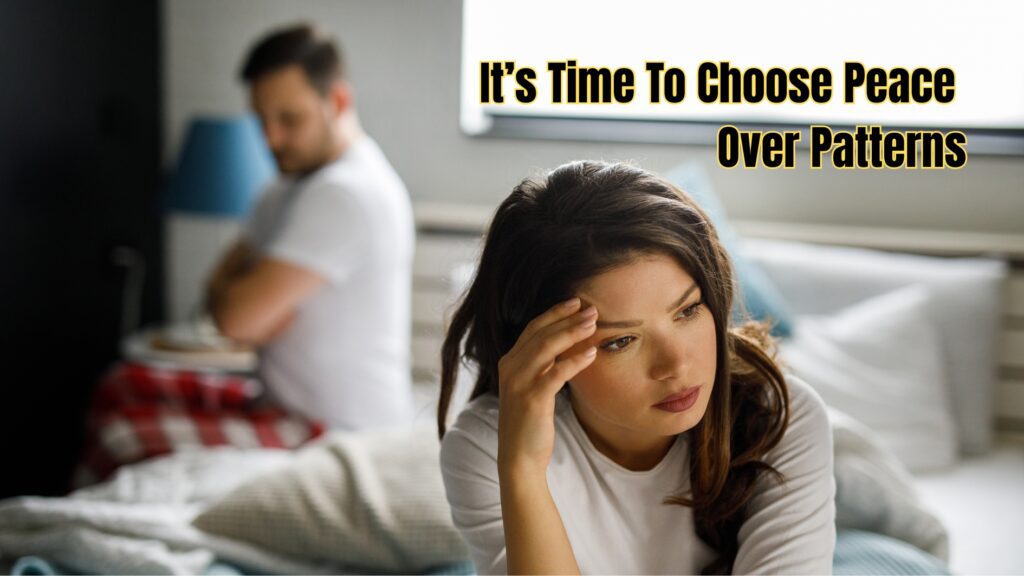
This is your manual for recovering clarity, love, and tranquility, regardless of whether you’re in a relationship or recovering from one.
🔍 Understanding Toxic Relationship Patterns
Before we dive in, let’s clarify: toxic relationship patterns are not always clear. Both partners are kept in emotional turmoil by recurring emotional cycles, such as envy, control, and criticism. No matter how much love is left, they destroy self-worth, joy, and trust.
🚨 1. The Blame Game: “It’s Always Your Fault”
What it looks like: One or both partners constantly point fingers, never taking accountability.
Real-Life Example:
Julia and Mark had constant fights about money. Julia blamed Mark for overspending, while Mark accused Julia of being controlling. No one took ownership, and every conversation became a courtroom.
Expert Insight:
Dr. Terri Orbuch, author of 5 Simple Steps to Take Your Marriage From Good to Great, explains, “Couples who take individual accountability show higher levels of intimacy and satisfaction.”
How to Break It:
- Use “I” statements, e.g., “I feel overwhelmed when our budget isn’t discussed.”
- Start conflict-resolution discussions with calm intent, not accusation.
- See a couples therapist for tools in communication.
🧊 2. The Silent Treatment: Emotional Withholding
What it looks like: Shutting down, ignoring messages, or giving cold stares after a disagreement.
Real-Life Example:
After arguments, Lisa would ghost her partner for hours—even days. Her partner, Joe, felt abandoned and anxious, leading him to beg for resolution, creating an unhealthy power dynamic.
Recent Research:
A 2023 Stanford study showed that emotional stonewalling increased cortisol levels, harming not just the relationship but physical health.
How to Break It:
- Practice “time-outs” instead of silent treatments.
- Schedule a reconnect time to discuss conflicts.
- Be honest about your emotional limits.
🔄 3. Codependency: Losing Your Identity
What it looks like: Needing constant approval, avoiding conflict at all costs, or feeling incomplete without your partner.
Case Study:
Amara and Jacob had been together for five years. Amara abandoned her hobbies, friendships, and career aspirations to avoid upsetting Jacob. She later confessed she didn’t recognize herself anymore.
Checklist to Identify Codependency:
- Do you cancel plans to be available for your partner?
- Do you feel anxious if they’re upset—even if it’s not about you?
- Do you struggle to say “no”?
If you checked 2 or more, codependency may be present.
How to Break It:
- Reconnect with passions and goals outside your relationship.
- Set and honor emotional boundaries.
- Try individual therapy to rebuild self-worth.
⚔️ 4. Constant Criticism: The “Nothing Is Ever Good Enough” Trap
What it looks like: One partner regularly devalues or mocks the other’s actions, appearance, or personality.
Real-Life Example:
Jared constantly made jokes about Mia’s weight, disguised as “playful teasing.” It chipped away at her confidence, making her feel unloved and on edge.
Expert Interview:
Psychologist Dr. John Gottman states: “Criticism is one of the Four Horsemen of Relationship Apocalypse. When left unaddressed, it leads to contempt.”
How to Break It:
- Replace criticism with appreciation.
- Use the “Sandwich Method”: Positive → Concern → Positive.
- Set clear agreements around respect.
🎭 5. Walking on Eggshells: Fear of Triggering Explosions
What it looks like: Suppressing your voice to avoid outbursts, fearing their reaction to honest conversation.
Case Study:
Tanya rarely spoke up about her needs. Her partner, Alex, would lash out when challenged. Over time, she became anxious, withdrawn, and resentful.
How to Break It:
- Create a safe word to pause heated moments.
- Seek counseling to address emotional regulation.
- If emotional abuse is present, prioritize safety and support.
🕰️ 6. Keeping Score: “Remember When You Did That?”
What it looks like: Using past mistakes as weapons in every fight.
Example:
During every disagreement, Ben reminded Clara of a text conversation from 2 years ago. Clara felt like no apology ever mattered.
Recent Research:
According to the American Psychological Association, healthy couples who resolve conflicts without keeping score report 40% higher relationship satisfaction.
How to Break It:
- Agree to let go of resolved issues.
- Replace blame with growth-focused reflection.
- Practice forgiveness as an active choice, not a passive hope.
🌀 7. Emotional Manipulation: Guilt-Tripping and Gaslighting
What it looks like: Making you feel guilty for setting boundaries or questioning your reality.
Real-Life Example:
Anytime Priya asked her boyfriend to spend less time gaming and more time together, he’d respond, “Wow, I guess I’m just never good enough for you,” leaving her feeling selfish and wrong.
How to Break It:
- Learn to identify manipulation tactics like gaslighting and guilt trips.
- Use statements like, “This is how I feel. I’m not blaming, I’m expressing.”
- Set firm, kind boundaries.
🕳️ 8. On-and-Off Cycles: Breaking Up to Make Up
What it looks like: Repetitive cycles of breaking up and reconciling without resolving the underlying issues.
Case Study:
Sofia and Ray broke up five times in three years. Each time, they swore it was different, but the same fights about loyalty, trust, and effort re-emerged.
How to Break It:
- Ask yourself what keeps pulling you back—love or trauma bonds?
- Set a 90-day no-contact rule after a breakup.
- Seek therapy to uncover deeper emotional dependencies.
🧠 Toxic vs. Healthy Relationship Patterns – Comparison Table
| Pattern | Toxic Behavior | Healthy Alternative |
|---|---|---|
| Blame | “You never listen!” | “I feel unheard when I speak.” |
| Silent Treatment | Ignoring calls/texts | Taking space and reconnecting respectfully |
| Codependency | Losing self-identity | Maintaining independence |
| Criticism | Mocking partner’s efforts | Offering constructive feedback |
| Fear-Based Silence | Avoiding confrontation | Calmly expressing concerns |
| Scorekeeping | Bringing up past fights | Resolving and moving forward |
| Manipulation | Guilt-tripping | Respecting boundaries |
| Breakup Cycles | On-off pattern | Committing to healing or closure |
✅ Checklist: How to Break Free from Toxic Relationship Patterns
- Have I identified recurring toxic behaviors in my relationship?
- Am I emotionally honest with myself and my partner?
- Have I sought professional or peer support?
- Do I understand my triggers and reactions?
- Am I setting and respecting clear boundaries?
- Have I addressed childhood or past trauma that fuels these patterns?
- Am I rebuilding my self-worth daily?
🌐 External Resources
- Gottman Institute – World-renowned relationship science backed by 40+ years of research.
- Psychology Today’s Therapist Finder – Find licensed counselors globally.
- Love Is Respect – For relationship abuse support and resources.
🤔 FAQs : Toxic Relationship Patterns
Q1.What are toxic relationship patterns?
Toxic relationship patterns are recurring negative behaviors or dynamics that damage emotional well-being, trust, and connection in a relationship.
Q2.Can a toxic relationship become healthy?
Yes, but both partners must acknowledge the issues, seek help, and commit to change. If only one partner is trying, healing is difficult.
Q3.Are toxic patterns always abusive?
Not always. Toxic behaviors can exist without outright abuse but still create emotional harm over time.
Q4.Why do people stay in toxic relationships?
Fear of loneliness, emotional dependency, hope for change, or lack of support can all keep people stuck in unhealthy cycles.
Q5.How do I know if I’m the toxic one?
Reflect honestly. If you dismiss, control, or emotionally harm your partner regularly, it’s time for self-work and accountability.
Q6.Can therapy help with toxic patterns?
Absolutely. Individual or couples therapy can uncover root causes and teach healthy coping and communication skills.
Q7.What’s the first step to breaking free?
Awareness. Acknowledge the pattern, then create a plan with support—whether that’s journaling, therapy, or safe separation.
Q8.Is ghosting a toxic behavior?
Yes. It’s a form of emotional withdrawal and avoidance, and it damages trust and emotional safety.
Q9.Can love exist in a toxic relationship?
Yes, love can exist. But love alone doesn’t fix patterns. Respect, safety, and communication are essential for a healthy bond.
Q10.Should I leave a toxic relationship or try to fix it?
It depends. If there’s abuse, leave. If both partners are willing to grow and change, it may be worth rebuilding—with boundaries and help.
💬 Final Thoughts
Breaking toxic relationship patterns is about having the awareness, integrity, and courage to make better decisions, not about being flawless. Every relationship experiences ups and downs, but when the turmoil becomes the norm, it’s time to make a shift.
Remember that you deserve peace, respect for one another, and love that heals rather than hurts if you’re caught in cycles that drain you more than they enhance you. Avoid waiting on someone else to change. You are the one who takes the first brave step.
Useful Articles :-
- Signs of Love Bombing: 7 Red Flags to Spot Manipulative Affection Early
- What Is a Situationship? 7 Unfiltered Truths About Modern Love
- 10 Signs of a Healthy Relationship: What To Look For
- Communication Skills for Couples: 7 Transformative Tips to Strengthen Your Connection
- 7 Powerful Ways to Build Healthy Relationship Boundaries for Lasting Love
- 9 Empowering Steps for Recovering from a Breakup: Heal, Grow, and Thrive
- 7 Powerful Long-Distance Relationship Advice : Tips to Keep the Spark Alive
- Jealousy in Relationships: 7 Powerful Ways to Manage the Green-Eyed Monster
- 5 Insights Into Love Languages in Relationships : Do They Really Work?
- What Does Emotional Safety In Relationships? 7 Biblical Keys to Building Trust and Intimacy